
Fine Print: A quick guide to how New Zealand taxes your cryptocurrency

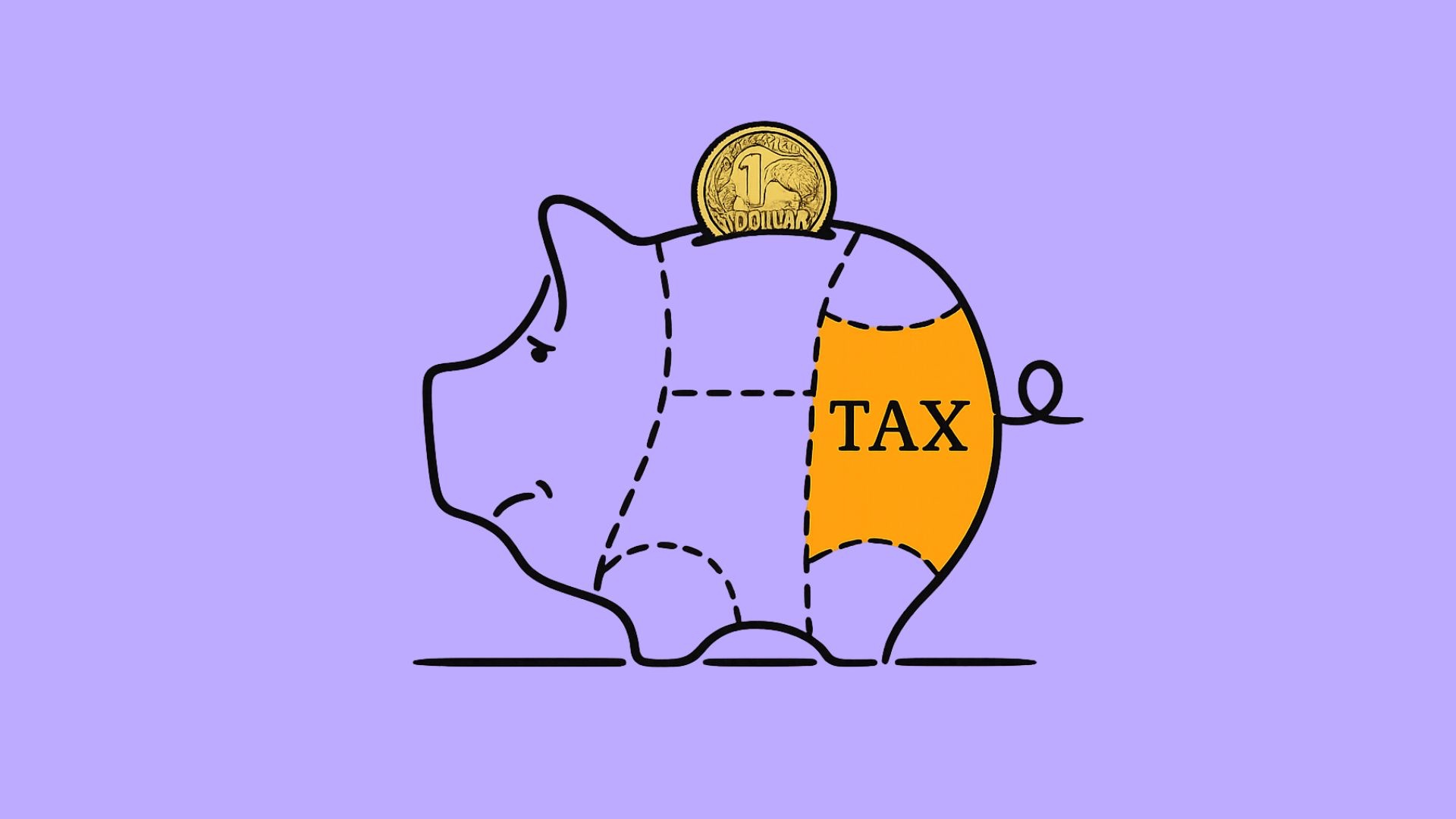
For years, cryptocurrency has flown under the radar of the taxman. (Awaaz artwork)
"Forgetting” to report your crypto gains is no longer an option.
(Fine Print is an ongoing series that looks at how things actually work in New Zealand. Beyond what most migrants are told.)
Cryptocurrency (or “crypto”) is a form of digital asset that uses cryptography and blockchain technology to operate independently of central banks or governments.
Unlike traditional money issued by countries, cryptocurrencies are typically decentralised and recorded on a public ledger known as a blockchain.
Crypto investing is booming among New Zealand residents.
Cryptocurrency has moved from the fringe to the mainstream, with hundreds of thousands of New Zealanders now actively investing, trading, or earning through digital assets.
South Asian diaspora raises over $200,000 for New Zealanders missing in Nepal flood "I'm so proud of the Indian community here who...supported us, saying it is not a Nepal problem but our problem."
Tamakis launch Indian-origin candidate for Epsom who surrendered passport and has ‘assimilated’ “I know a whole lot of people are going to be like shocked,” says Hannah Tamaki.
Priyanca Radhakrishnan tries to puncture Luxon’s FTA victory, says India was already sold “Things have changed quite dramatically on the Indian government side,” says the Indian-origin Labour MP.
While crypto may feel like a new asset class, its taxation in New Zealand is firmly rooted in existing law — and often misunderstood.
For years, many New Zealanders viewed cryptocurrency as a digital hobby that flew under the radar of the taxman. But as of April 2026, the Inland Revenue Department (IRD) has officially closed the net. With new tracking technology and updated rules, “forgetting” to report your crypto gains is no longer an option.
As of April 2026, the Inland Revenue Department (IRD) has officially closed the book on the “wild west” era of cryptocurrency in New Zealand. With the launch of the Global Crypto-Asset Reporting Framework (CARF) this month, tax transparency for digital assets has reached an all-time high.
For investors – whether they are Kiwi citizens or Non-Resident Indians (NRIs) living in NZ – understanding the nuances of the law is no longer optional. It is now a requirement to avoid heavy penalties.
The “property” principle: Section CB 4
Under New Zealand law, cryptocurrency is not considered “money” or “currency”. Instead, the Income Tax Act 2007, Section CB 4, classifies crypto-assets as property.
The taxability of your gains hinges on the “dominant purpose” test. If you acquired a digital asset with the intent of selling or exchanging it for a profit, the IRD views any gain as taxable income.
Unlike many other nations, New Zealand does not have a separate capital gains tax. Instead, these profits are added to your total annual income and taxed at your marginal rate, which ranges from 10.5% to 39%.
Taxation for residents vs NRIs
Your tax obligations depend heavily on your residency status rather than your passport.
NZ tax residents: Residents are taxed on their worldwide income. This includes gains made on international exchanges like Binance or Coinbase, as well as local platforms. Every “disposal” — selling for cash, swapping one coin for another, or buying goods with crypto — is treated as a taxable event.
Transitional residents & NRIs: New migrants or returning New Zealanders after a 10-year absence may qualify for “Transitional Residency”. This provides a four-year tax exemption on most foreign-sourced income. During this window, crypto gains made on offshore exchanges are generally exempt. However, any trading done on NZ-based platforms or income earned while physically in NZ remains taxable from day one.
The 2026 CARF amendment: The “game changer”
The most significant update for 2026 is the implementation of the Crypto-Asset Reporting Framework (CARF). Effective from 1 April 2026, this OECD-led initiative requires all Crypto-Asset Service Providers (RCASPs) to collect and report user data directly to the IRD.
This means:
Automatic Data Sharing: The IRD now receives automated reports on your transactions, including names, IRD numbers and total trading volumes.
Global Reach: Data is shared internationally. If an NRI trades on an exchange in India or Singapore while living in NZ, the IRD will eventually receive that data through international exchange agreements.
Strict Compliance: The first mandatory reports are due by 30 June 2027, but the IRD is already using its existing powers to match past exchange data against filed tax returns.
Expert tips for the 2026 tax year
The “honesty system” is over: With CARF now active, the IRD has high visibility into crypto activity. “Forgetting” to report crypto income is now a high-risk strategy that could lead to shortfall penalties ranging from 20% to 150%.
Voluntary disclosure: If you have missed reporting crypto income in previous years, the IRD offers a voluntary disclosure pathway. Doing this before an audit begins can reduce or even eliminate penalties.
Record everything: The burden of proof lies with the taxpayer. Under Section CB 4, you must be able to prove your original intent and maintain a clear audit trail showing the NZD value for every transaction.
As the IRD continues to increase its scrutiny, the message to New Zealand’s crypto users is clear: keep records, understand your residency status, and report your gains before the IRD reports them for you.

A man with a mustache and wearing a gray suit and tie is smiling and speaking into a microphone.
(Raj Kapoor is a chartered accountant by training and a Senior Partner at Mohindra & Associates in New Zealand and India. He has spent decades across finance, governance and audits. A former board member of the State Bank of India and long-time ICAI office-bearer, he now chairs the New Zealand Chapter of ICAI.)