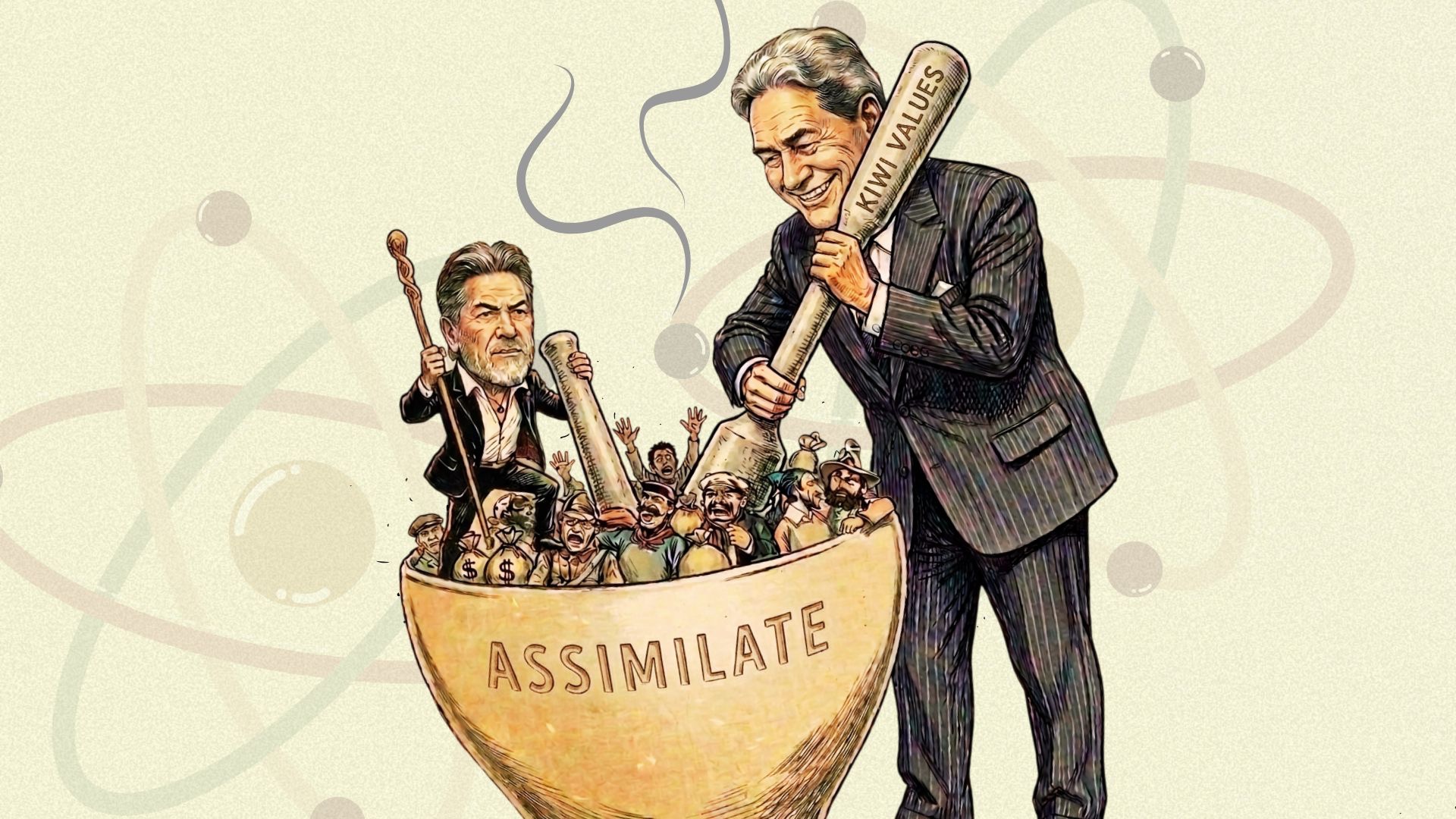

Out Loud: Lessons for Brian Tamaki from the migrant playbook

Brian Tamaki was at (yet) another march against immigration in Auckland on April 25, 2026.
Imagine if the provocative preacher could channel his energy into something that actually improves outcomes.
('Out Loud' is an opinion column that takes the political, cultural and social debates Indian migrant households save for home and says them out loud, consequences pending.)
Watching yet another march led by Brian Tamaki and Co in Auckland over the weekend, one thing was undeniable. The sheer amount of effort it must've taken to organise such an impressive turnout of youngsters.
A fringe group associated with the self-styled, far-right preacher assembled hundreds of people at Queen Street on April 25, 2026. Tamaki described it as a march to "honour our ANZACs".


"This wasn’t just remembrance. This was resistance...We resist Mass Immigration," he posted on Facebook.
That gathering took effort. Organisation. Time out of people’s lives. The videos and photos of it on social media looked truly impressive. You don’t get crowds like that by accident.
NZ First wants to end birthright citizenship for children of migrants, work rights for students "This set of polices is about taking back control of the future of our country and valuing our unique citizenship the way it should be."
India-NZ FTA gets select committee nod, stage set for anticipated October launch “If that is the case, how exciting is that for New Zealand. Exciting, isn’t it?”
‘Huge mistake’: Indian couple lose New Zealand residence while living in Canada The family had a second shot at applying for permanent residency but they were late by less than a month.
But here’s the question no one marching seems interested in asking. What if that same energy was put into something that actually improves outcomes?
Shouting about immigration is easy. Understanding it, and learning from it, is harder. And right now, we’re choosing easy.
Across New Zealand, there are thousands of migrants arriving every year who, within two to five years, are not just surviving but moving ahead. Not all. But enough that the pattern is obvious.
And yet instead of studying that, we protest it. So here it is. No spin, No politics. A migrant's playbook for life that Tamaki might find handy in his training toolkit for youngsters.
The five things migrants consistently do that drive early success:
1. Relentless work ethic
For many migrants, New Zealand isn’t a place to slow down. It’s a place to accelerate.
It’s not uncommon to see people working two jobs, picking up weekend shifts, or taking on roles that others simply won’t consider. There’s a clear understanding that the early years matter, and effort now compounds later.
This isn’t about exploitation, it’s about mindset. There’s no expectation that comfort comes first. Progress does.
And that shift alone changes outcomes dramatically.
2. Financial discipline that actually compounds
A lot of migrants arrive with a very simple approach to money: spend less than you earn, consistently.
That means shared housing, delayed upgrades, fewer luxuries early on. It’s not about deprivation. It’s about sequencing. Build stability first, lifestyle later.
Over time, that discipline turns into deposits, business capital, or the ability to absorb shocks without falling over.
It’s not flashy. But it works.
3. Family and community as an advantage, not a fallback
There’s a strong tendency to treat family as an economic unit, not just a social one.
Costs are shared. Childcare is coordinated. Opportunities are passed around. If one person gets ahead, it creates a pathway for others.
That creates resilience and speed. It’s much easier to move forward when you’re not doing it alone.
It’s also something we’ve drifted away from culturally, and it shows.
4. Ruthless focus on skills that pay
There’s very little romanticism about career choices early on.
The question isn’t “what do I enjoy most?”. It’s, “What gets me ahead fastest?” That often means trades, certifications, or practical qualifications that translate directly into income.
Once stability is built, options expand. But the early focus is clear-eyed and pragmatic.
It’s not always inspiring. But it’s effective.
5. Willingness to start anywhere—and move fast from there
Many migrants take opportunities others overlook – industries with shortages, locations outside major centres, roles that don’t carry status.
But they don’t stay stuck. They use those roles as stepping stones.
There’s an understanding that your first job isn’t your identity. It’s your entry point. And that mindset keeps momentum going.
None of that is exclusive to migrants. Anyone in this country can do it. Most just don’t. So instead of asking, “How do we stop them?”, a far more useful question would be – “Why aren’t we replicating what clearly works?”
If the concern is pressure on housing, infrastructure, or services, that's fine. That’s a policy problem. It needs grown-up solutions. But blaming the people who are playing the game well?
That’s not strategy. That’s deflection.