
Selling cigarettes legally in NZ doesn't add up anymore. How did we get here?

Successive governments have unsuccessfully tried to price cigarettes out of market.
New Zealand’s aggressive tobacco taxation regime did not begin as a cynical revenue grab.
The economics of tobacco in Auckland no longer makes sense for the people selling it legally.
An RNZ investigation has found illicit cigarettes being openly sold across parts of the city at less than half the legal price, undercutting licensed retailers and exposing how far the market has shifted.
For small, often family-run dairies, the impact is immediate — lost sales, rising risk, and a product that is increasingly difficult to sell through legitimate channels.


What’s playing out on shopfronts today is the result of a policy approach that, for more than a decade, relied heavily on one idea: if cigarettes became expensive enough, people would stop buying them.
New Zealand’s aggressive tobacco taxation regime did not begin as a cynical revenue grab. It began with a serious and, at the time, compelling argument.
South Asian diaspora raises over $200,000 for New Zealanders missing in Nepal flood "I'm so proud of the Indian community here who...supported us, saying it is not a Nepal problem but our problem."
Tamakis launch Indian-origin candidate for Epsom who surrendered passport and has ‘assimilated’ “I know a whole lot of people are going to be like shocked,” says Hannah Tamaki.
Priyanca Radhakrishnan tries to puncture Luxon’s FTA victory, says India was already sold “Things have changed quite dramatically on the Indian government side,” says the Indian-origin Labour MP.
Smoking was — and remains — one of the leading causes of preventable death. It placed a significant burden on the public health system, and that burden was not evenly distributed.
Maori communities, in particular, were disproportionately affected, with higher smoking rates and worse long-term outcomes. By the late 2000s, the case for intervention was strong and widely accepted.
The 2010 Maori Affairs Committee inquiry became the turning point that translated that concern into policy direction. Its conclusion was clear. If New Zealand was serious about reducing smoking, then price needed to be the primary lever.
And initially, it appeared to work. Daily smoking rates fell significantly over the following decade, dropping from around 16–17% in the early 2010s to below 7% in recent data.
That decline reinforced confidence in the approach and strengthened the belief that price-led policy was delivering results.
What followed was not a cautious or adaptive policy. It became a structured, pre-committed escalation. Successive governments — first National, then Labour — did not just increase tobacco excise. They locked in repeated, compounding increases, year after year.
Since 2010, excise has been increased annually by inflation plus an additional 10%, embedding a system of predictable and continuous price growth.
This is how a targeted intervention becomes orthodoxy. The underlying assumption was that price would continue to operate as a clean and predictable lever. If it worked at one level, it would work at the next. But that assumption was never seriously stress-tested against how people and markets behave under sustained pressure.
Markets do not disappear when price increases. They adapt.
In New Zealand, that adaptation became visible through the rapid rise of vaping. As cigarettes became increasingly expensive — often exceeding $40 per pack — alternative nicotine products remained comparatively accessible, both in price and availability.
Daily vaping, once almost non-existent, has risen sharply to over 10% of adults, with even higher uptake among younger New Zealanders. This shift highlights a key limitation in the original policy design.
Smoking declined, but nicotine use did not disappear. It diversified. The strategy had been built around eliminating one product. It had not fully accounted for what would replace it.
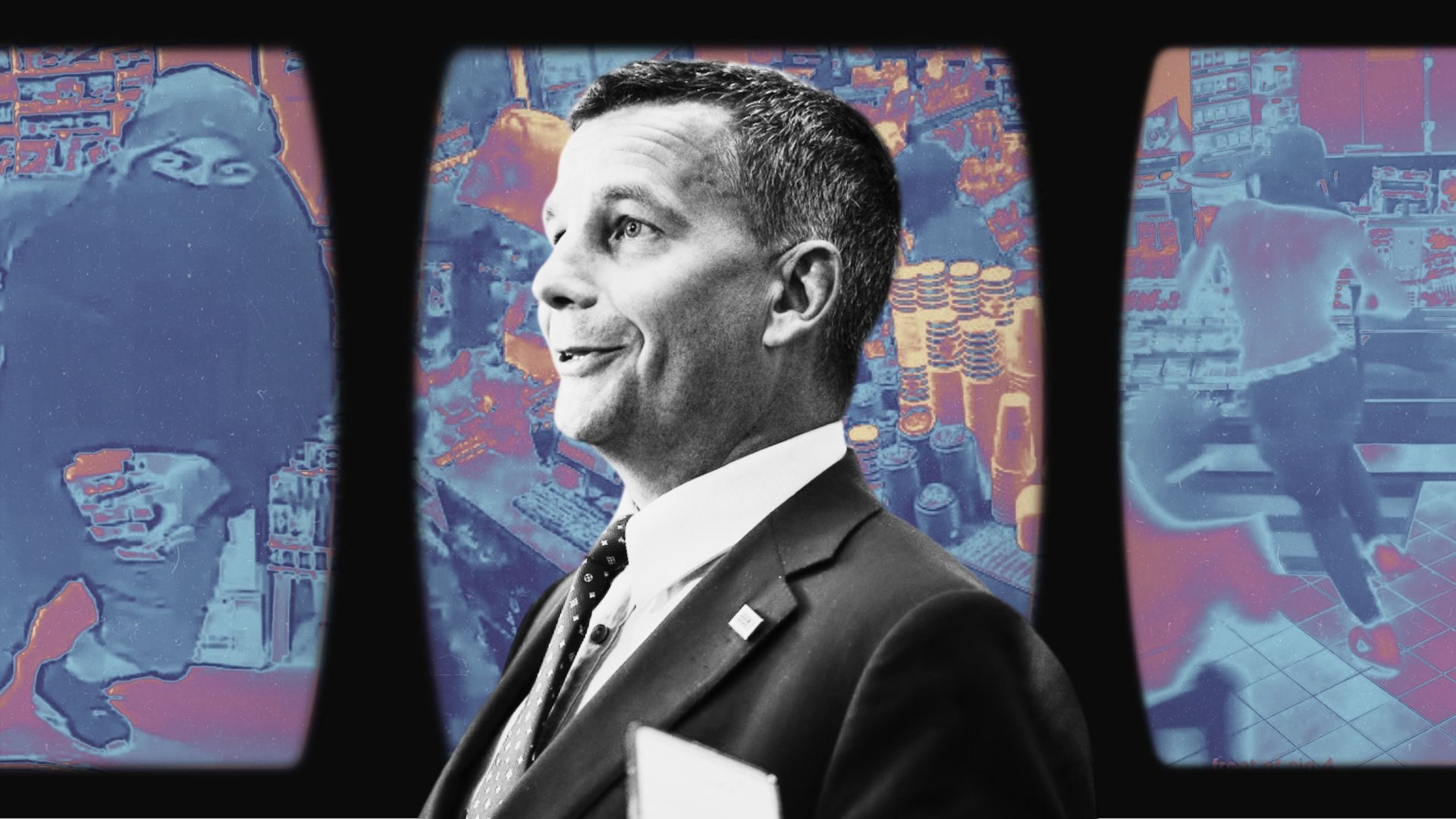
As tobacco prices continued to rise, the consequences of that strategy became visible in a far more immediate way. Retail crime surged. Ram raids and aggravated robberies increased sharply, with hundreds of incidents recorded during peak periods.
These were not random acts. They were heavily concentrated around small retailers — particularly dairies — where high-value, easily resellable goods were stored. Tobacco had, by design, become one of the most expensive consumer products in the country.
That same pricing dynamic also made it one of the most attractive targets for theft. Even official policy advice anticipated this risk. Treasury explicitly warned that increasing tobacco excise could raise security risks for retailers by making tobacco more attractive to criminals.
When a product is highly addictive, widely demanded, and artificially inflated in price, the incentives change. The legal market becomes harder to access, while the rewards for bypassing it increase.
For retailers, the experience has been very different. They have carried the burden of this shift directly. Repeated break-ins, escalating security costs, insurance pressures, and concerns for personal safety have become part of operating a small business.
Many of these businesses are family-run, operating on thin margins, and now expected to manage risks created by a policy they had no role in shaping.
This is not simply a policing issue. It is a consequence of incentives. And it is one of the clearest examples of how a policy designed in theory can produce concentrated and very real impacts on the ground.
At a certain point, sustained pressure changes the structure of a market. New Zealand has reached that point.
As legal tobacco prices climbed, a parallel market began to expand. Illicit tobacco — whether smuggled, stolen, or locally produced — has become more visible and more accessible.
Enforcement agencies have reported a significant increase in activity, with tens of millions of cigarettes seized over recent years.
At the same time, tobacco excise revenue has started to come in below forecast, suggesting that a growing share of consumption is now occurring outside the taxed system.
This represents a fundamental shift. The effectiveness of tobacco taxation depends on one key condition. That most consumption remains within the legal, regulated market. Once that condition weakens, both revenue and control begin to erode.
Consumers who remain in the market are increasingly faced with a choice — pay some of the highest legal prices in the world, or access significantly cheaper alternatives through informal channels.
Many are choosing the latter. And once that shift occurs, the core mechanism of the policy begins to lose its power.
There is another layer to this story that deserves careful attention. Much of the original momentum behind aggressive tobacco control was driven by a desire to reduce harm in vulnerable communities. That intent was genuine, and it remains important.
However, the distribution of impact has not remained even. Smoking rates today are still significantly higher in more deprived communities — around 13–14% compared to roughly 2–3% in the least deprived areas.
This means that the financial impact of repeated tax increases falls most heavily on those already under economic pressure. For higher-income households, rising prices are more likely to function as a deterrent. For lower-income households, the situation is more complex.
When addiction intersects with financial constraint, behaviour does not always align with policy expectations. Instead of quitting, many face ongoing trade-offs within already stretched budgets.
At the same time, the secondary effects of the policy — including exposure to crime and the growth of informal markets — are more likely to be felt in those same environments. This is not a question of ethnicity. It is a question of incentives, pressure, and circumstance.
The same dynamic is visible in the illicit tobacco market. Those most likely to seek out cheaper alternatives are those for whom the legal option has become economically unrealistic.
Because equity is not defined by intent. It is defined by outcomes.
None of this is an argument against reducing smoking. That goal remains valid and important. The issue is how that goal was pursued.
New Zealand placed overwhelming reliance on a single mechanism — price — and assumed it would continue to deliver consistent results regardless of context.
In doing so, it underestimated the complexity of human behaviour and the adaptability of markets. Substitution occurred. Criminal incentives emerged. Informal supply chains developed. And over time, the effectiveness of the policy began to weaken.
The question facing New Zealand now is not whether tobacco taxation works in principle. It clearly does, particularly in the early stages. The question is whether pushing it to extremes — without adjusting for its side effects — creates a different set of problems that are harder to manage.
New Zealand did not just raise tobacco taxes. It pushed them to a point where the system itself began to fracture. The challenge now is not to defend what has been done, but to honestly assess what is happening — and whether the current approach is still delivering the outcomes it was designed to achieve.
When policy ignores behaviour, behaviour doesn’t disappear — it adapts.
The lesson here isn’t that smoking should be tolerated. It’s that policy built on a single lever — no matter how well-intentioned — will eventually run into the reality of human behaviour.
In New Zealand, that reality now includes fewer smokers — but more vaping, rising illicit supply, and retailers carrying the cost through crime and risk.
So the question is simple. Are we still shaping behaviour — or just pushing it somewhere we can’t see?