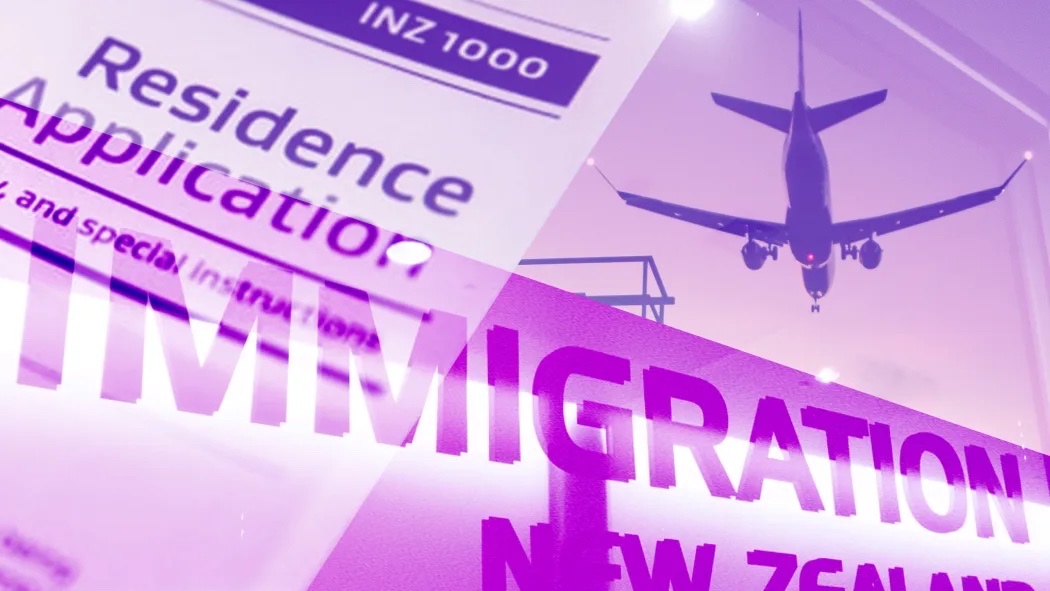
How New Zealand's tougher English-language checks will work, immigration officials explain

Immigration minister Erica Stanford. (Supplied photo)
Officials reveal concerns about overseas qualifications being used to bypass English tests.
International students who have already met the English-language admission requirements of a New Zealand education provider could still be asked to produce additional evidence of their language skills when applying for a visa.
Immigration New Zealand (INZ) has explained how its tougher English-language checks will work, revealing concerns that some students, education agents and providers may be exploiting a loophole allowing overseas qualifications to substitute for approved English tests.
INZ's Director Visa Celia Coombes told Awaaz officials had identified concerns about students using foreign qualifications as evidence of English proficiency rather than sitting an approved English-language test.


"Although these arrangements may comply with education rules, there are concerns that some students, agents and providers may be using them as a loophole," Coombes said.
The explanation follows changes to student visa rules announced on October 27, which explicitly strengthened the role of English proficiency in determining whether an applicant is likely to comply with visa conditions.
Kiwi woman wins residence for stepson after choosing not to legally adopt him She raised him as her own for six years, but immigration rules refused to recognise her as his parent.
Indian mother in Auckland jailed over her baby's broken bones may be innocent Eight years after an Auckland couple took their baby to hospital, new medical evidence has raised questions about a conviction that separated their family for years.
Hamilton takeaway boss used visa threat to force migrant to falsely blame partner for fight The Indian worker was also made to work an 88-hour week and denied leaves.
While the original announcement outlined the new requirements, it did not explain what had prompted the tougher scrutiny or how immigration officers would identify applicants whose English-language ability might be inadequate.
How will the new checks work?
Students applying to New Zealand education providers can demonstrate English proficiency through recognised tests such as IELTS, TOEFL or PTE Academic.
However, depending on the qualification and applicable admission rules, some applicants can also meet English-language entry requirements through previous academic qualifications, including certain overseas qualifications taught and assessed in English.
This means a student may secure admission without sitting a separate English-language test. INZ's concern is that satisfying an institution's admission requirements does not necessarily establish that a student has sufficient English proficiency to successfully undertake the proposed course.
Under the amended immigration instructions, officers can request additional evidence of English-language ability, such as IELTS results, if they have concerns about an applicant's proficiency.
Coombes said immigration officers must be satisfied that applicants will comply with the conditions of their student visas, including attending their courses and making satisfactory academic progress.
"If a student does not have the required English ability to undertake the study, they are not likely to meet the conditions of a student visa," she said.
The changes do not introduce compulsory IELTS testing or a universal minimum English-language score for all international student visa applicants.
Instead, they explicitly allow officers to seek further evidence where they question whether a student's language skills are adequate for their intended studies.
What could trigger additional scrutiny?
Awaaz asked INZ what specific indicators immigration officers would use to identify applicants whose English proficiency might be inadequate, whether students could be required to sit additional tests or interviews, and whether consistent assessment thresholds would apply.
Coombes said concerns could emerge from different circumstances during the assessment of an application.
"A variety of circumstances could come to light during assessment that could raise concerns that an applicant does not have sufficient English language ability to achieve visa conditions."
She did not identify specific warning signs, explain whether interviews would form part of the process or specify any standard testing threshold.
INZ also did not identify which overseas qualifications had raised concerns, whether applicants from particular countries were involved or how many cases of suspected misuse had been detected.
For prospective students, the practical implication is that an offer of admission from a New Zealand education provider may not, on its own, satisfy immigration officials that they have the English skills needed to complete their studies.