
Election'26: ACT’s security guard policy could change how NZ tackles everyday crime

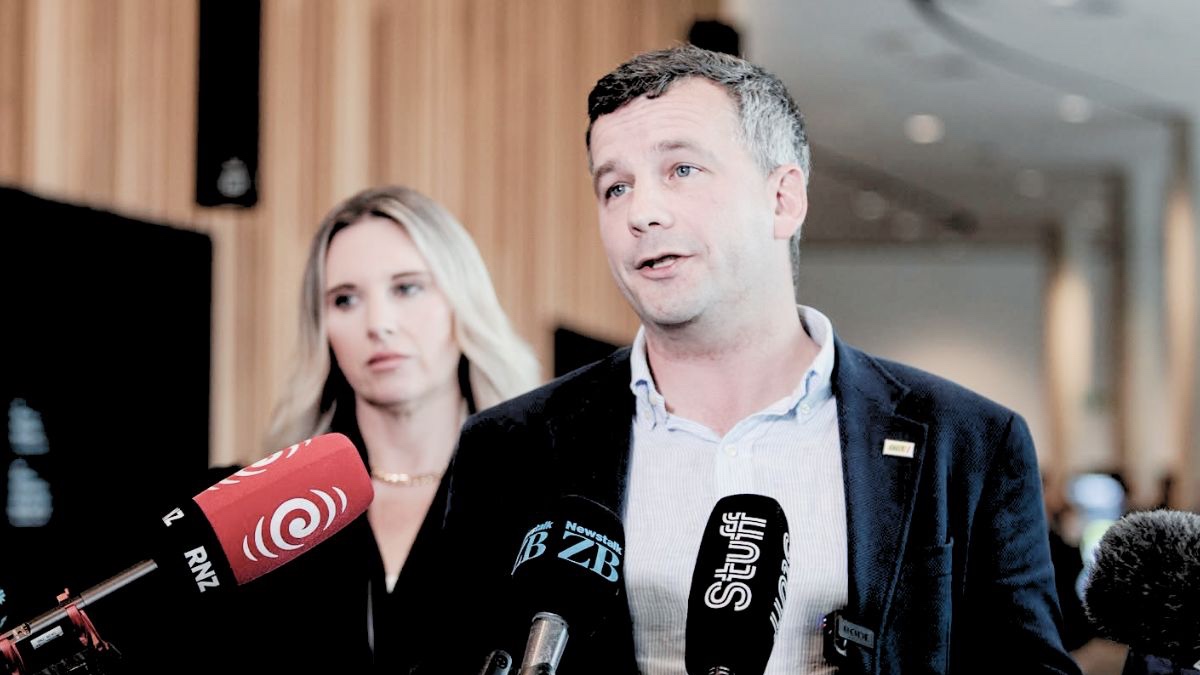
ACT Party leader David Seymour.
Under the scheme, Accredited Security Operators would complete formal education and licensing through the Private Security Licensing Authority.
(The writer, a regular columnist with Awaaz, is ACT Party's candidate from Waikato. He has been a member of the government's ministerial advisory group on victims of retail crime.)
Opinion: Every New Zealander deserves to feel safe doing the everyday things we often take for granted – shopping at the local supermarket, catching a bus home, or taking the family into town on a Saturday morning.
Most of us rarely stop to think about who keeps those public spaces safe. Until something goes wrong.
When violence breaks out in a shopping centre or a repeat offender begins intimidating staff, police are rightly expected to respond. But Police cannot be everywhere at once. Before officers arrive, it is often retail workers, transport staff and security guards who are left protecting the public with remarkably limited legal authority.
That gap has become increasingly obvious over recent years.
Selfie: ‘Daddy, please don’t take me to an India-NZ cricket match’. A migrant's dilemma Can a migrant embrace a new home without abandoning old loyalties? Sports often offers a reckoning for migrants.
Migrant prison guards in Auckland accused of drug smuggling can't work, can't go home Two fathers facing serious corruption charges have been unable to work elsewhere because of their visas and awaiting criminal trials in 2028.
Can you be Indian and Kiwi? National's Mahesh Muralidhar on patriotism, racism and belonging National's big ticket Indian-origin candidate on what ethnic representation really achieves and why New Zealanders still struggle to get along.
During my time serving on the ministerial advisory group on victims of retail crime, I heard the same message from retailers across New Zealand. They weren’t asking to become police officers. They weren’t asking for unlimited powers. They were asking for practical tools that would allow trained professionals to keep people safe until Police could take over.
That is why I welcome ACT’s proposal to establish Accredited Security Operators.
The proposal, announced on July 3, is not about creating “private police”. In fact, it does the opposite. It creates a higher professional standard for security personnel by recognising that if society expects them to take greater responsibility, they must also receive better training, stronger oversight and clearer legal boundaries.
Under ACT’s proposal, Accredited Security Operators would complete formal education and licensing through the Private Security Licensing Authority.
Those powers would only apply to trained, accredited professionals, and anyone who misused them could lose their licence. Accountability is built into the model from the beginning.
The proposal also tackles some of the practical frustrations that businesses deal with every day.
At present, someone who repeatedly steals or threatens staff can simply move from one shop to the next. A trespass notice issued by one business often does little to stop offending elsewhere in the same shopping precinct.
ACT proposes allowing Accredited Security Operators to issue conduct-based exclusion notices that can apply across participating businesses within a shopping precinct.
Instead of playing a game of cat and mouse from one doorway to another, repeat offenders could be excluded from the entire area. That is a practical response to a practical problem.
The proposal would also allow Accredited Security Operators, in clearly defined circumstances, to require a suspected offender to provide their name and address.
If that person refuses and refuses to leave, they could be briefly detained while police are called. Anyone who has spoken with retailers knows how often offenders simply walk away before police can attend.
This proposal seeks to close that gap while keeping strict limits around how long someone can be detained.
Importantly, the proposal also provides clear legal authority for trained operators to remove people who are threatening violence, causing damage or creating a genuine safety risk.
Rather than leaving everyone uncertain about what security staff can legally do, it establishes a transparent legal framework that protects both the public and those working to keep them safe.
The policy is equally clear about its limits.
Any use of force must be reasonable, proportionate and a genuine last resort. It must stop the moment the person complies or Police arrive. Consent-based bag and safety searches remain exactly that—consent-based.
Refusing a search does not create a criminal offence; it simply means a person may be refused entry or asked to leave the premises.
These safeguards matter because public confidence matters.
New Zealand should never accept a choice between public safety and civil liberties. Good policy achieves both. That means giving trained professionals enough authority to deal with dangerous situations while ensuring those powers are limited, transparent and subject to accountability.
Safer public spaces benefit everyone.
They encourage families back into town centres. They support local businesses. They improve confidence on public transport. Most importantly, they allow ordinary New Zealanders to go about their daily lives without fear.
No single policy will eliminate crime, and no one is suggesting Accredited Security Operators replace our Police. But they can help bridge the critical gap between the moment an incident begins and the moment officers arrive.
That is not about creating a tougher society.
It is about creating a safer one.