
54 hours worked, 26 hours paid: Indian migrant wins $60,000 from Auckland employer

The worker was related to the employers and arrived in New Zealand with an Accredited Employer Work Visa.
The man's additional claim that he paid unlawful premiums to procure the visa didn't hold up in the employment tribunal.
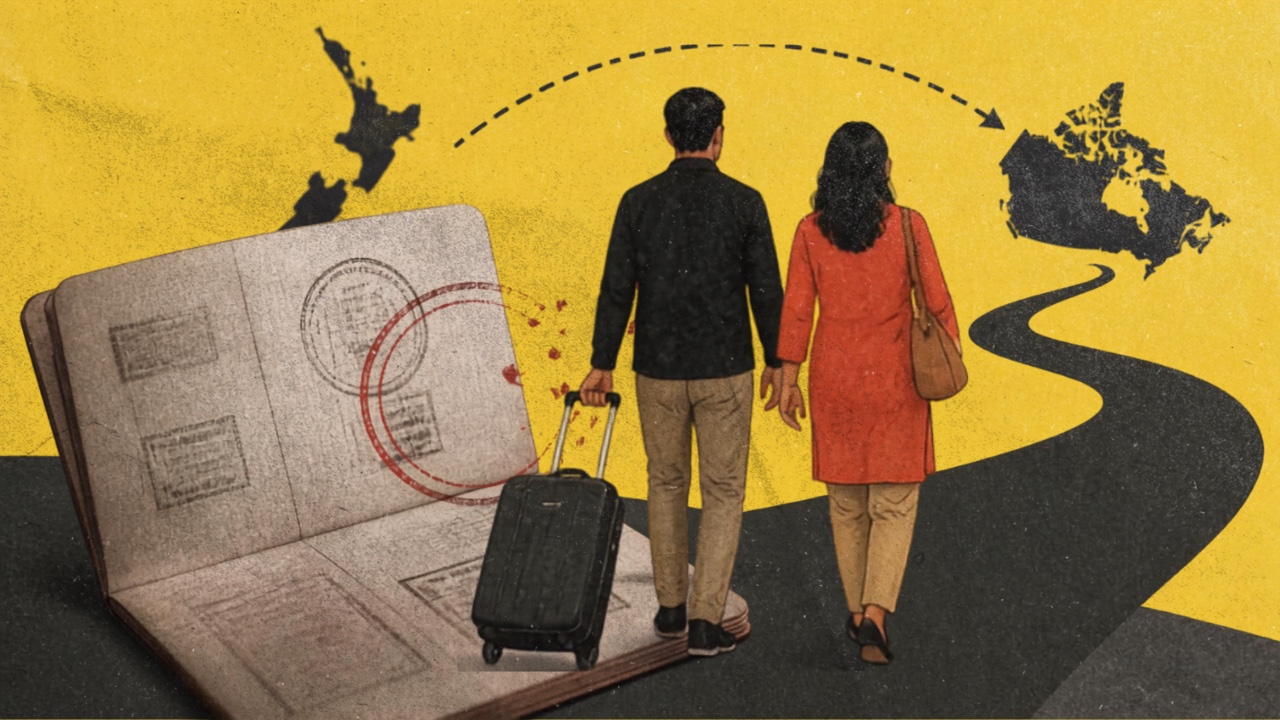
An Indian migrant who said he routinely worked 54-hour weeks for an Auckland lawn-mowing and handyman business but was paid for only 26 has won more than $60,000 in unpaid wages and holiday entitlements.
In a determination issued on September 28, Employment Relations Authority (ERA) member Sarah Blick ordered PA Service 2018 Ltd (now in liquidation) to pay Gurdev Singh Arora $56,103.32 in unpaid wages, time-and-a-half and alternative holidays; plus $4,553.28 in annual holiday pay.
If the company cannot pay, directors Amandeep and Harpreet Singh Luthra are liable for the shortfall.
The order puts a dollar figure on findings Blick first made on July 1, when she accepted Arora had worked more hours than he had been paid for but did not yet have enough information to calculate exactly what he was owed.
Arora, an Indian citizen, came to New Zealand in October 2022 on an Accredited Employer Work Visa to work as a gardener assistant and assistant handyman for PA Service.
Selfie: ‘Daddy, please don’t take me to an India-NZ cricket match’. A migrant's dilemma Can a migrant embrace a new home without abandoning old loyalties? Sports often offers a reckoning for migrants.
Migrant prison guards in Auckland accused of drug smuggling can't work, can't go home Two fathers facing serious corruption charges have been unable to work elsewhere because of their visas and awaiting criminal trials in 2028.
Can you be Indian and Kiwi? National's Mahesh Muralidhar on patriotism, racism and belonging National's big ticket Indian-origin candidate on what ethnic representation really achieves and why New Zealanders still struggle to get along.
His employment agreement guaranteed at least 30 hours a week at $27.90 an hour. But Arora told ERA from November 2022 until February 2024 he worked an average of 54 hours a week while being paid for only 26.
He said he generally worked six days a week, starting about 7.30am and often finishing at 5pm or 6pm. The claim was backed by handwritten records Arora kept of his hours and WhatsApp messages used to allocate jobs and record start and finish times.
Blick found his handwritten timesheets were more likely than not to be reliable because they were supported by other documentary evidence. The company had also failed to prove his claims of working additional hours were wrong.
Arora calculated he had received just $34,435.80 in pay between mid-October 2022 and mid-February 2024.
His later calculations showed a further $56,103.32 was owing for wages, time-and-a-half and alternative holidays, with another $4,553.28 due in annual holiday pay. Blick accepted those amounts.
Family connection and alleged job payments
Arora was also connected to the men behind the company through extended family. Amandeep and Harpreet Singh Luthra are brothers, and their mother is the older sister of Arora’s brother-in-law.
Arora alleged he had paid thousands of dollars in connection with securing the New Zealand job, producing bank records and messages referring to payments before his arrival.
But in her July determination, Blick declined to find those payments were unlawful job premiums.
The amount Arora claimed had changed during the proceedings – from $23,650 in his statement of problem, to $24,400 in his witness statement and $21,200 in closing submissions.
There was also uncertainty over whether some of the money related instead to personal loans between family members, settlement support, airfare and immigration-adviser costs.
The ERA ruled Arora had not proved, on the balance of probabilities, that the money amounted to unlawful premiums charged for employment.
Repeated requests for pay records
Arora also said he was never given payslips despite repeatedly asking for them and was often paid different amounts from week to week.
Although employers are not legally required to issue a payslip, they must keep wage, time and holiday records. Blick found PA Service had failed to meet those obligations, leaving Aurora unable to properly establish whether he had been paid for all the hours he worked.
She awarded him a separate $3,000 compensation in July for the resulting disadvantage. Not all of Arora’s claims succeeded though.
He alleged he had been threatened with withdrawal of visa support and deportation when he raised concerns about his pay, but Blick found there was insufficient evidence to establish that allegation.
He also failed in his claim that he had been unjustifiably dismissed. PA Service was placed into liquidation by the High Court at Auckland on February 4 following a petition by Inland Revenue.
Blick’s September 28 order gives the company 28 days to pay Arora’s wage and holiday arrears, subject to tax, with the two directors personally liable for whatever PA Service is unable to pay.