
Cheap money, long game: Japan is building influence in India
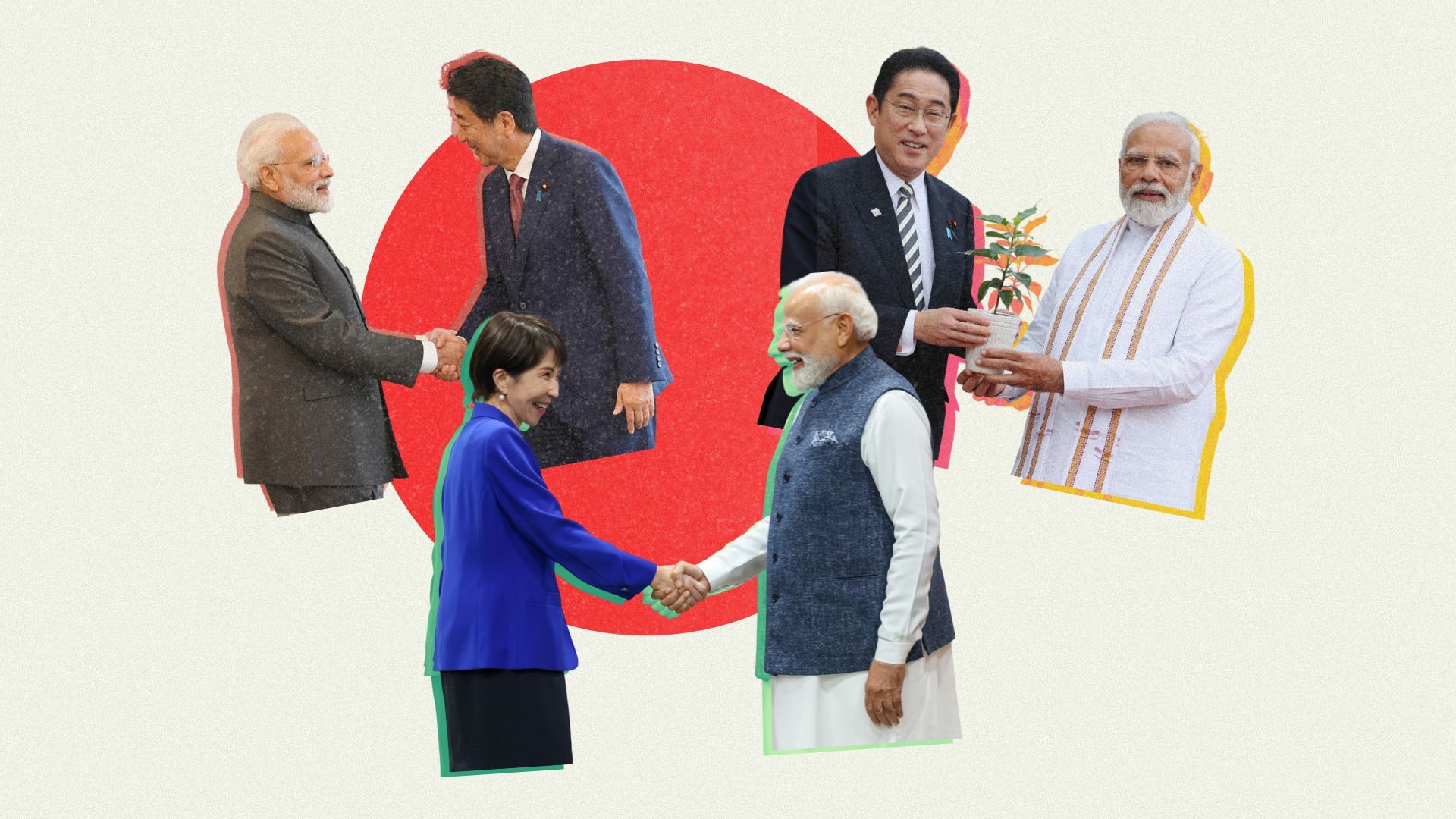
For India, the question is not whether to accept these partnerships, but rather how to optimise them.
Strategic partnerships are never one-sided. To understand Japan’s intent, you have to look beyond India
When Japan lends India billions of dollars at near-zero interest rates, it is often framed as generosity. It isn’t. It’s strategy. Deliberate, patient and deeply geopolitical.
Through its development arm, the Japan International Cooperation Agency (JICA), Japan has extended long-term loans to India at rates as low as 0.1 per cent, with repayment periods stretching up to 50 years.
These are not symbolic sums. They are funding some of India’s most transformative infrastructure projects, from metro systems in major cities to the Mumbai-Ahmedabad high-speed rail corridor.
At first glance, this looks like development assistance. In reality, it is economic statecraft.
The mechanics of influence
'Devastating': Indian family racially abused in Christchurch, hunt on to identify attacker “We’ll always be reminded of this, thanks to this man who thinks we don’t belong.”
Immigration reset: National drops hints as parties on left and right target permanent residence New Zealand's permanent residence framework provides an edge over Australia and Canada in attracting overseas talent.
NZ First’s policy of division: Turning hatred of migrants into political power This is no immigration reform. It is the politics of exclusion presented as population planning.
Japan has been India’s largest bilateral development partner since 1958, extending loans and grants under its Official Development Assistance (ODA) programme. The focus has been on core sectors such as power, transport, environment, and basic human needs.
According to the Indian government, cumulative commitments now exceed NZ$75.3 billion across 84 ongoing projects. Beyond funding, Japan has invested about NZ$1.18 billion in technical cooperation, sending over 11,800 experts to India and training 8,400 Indian professionals.
Japan’s concessional loans sit in a category that blurs the line between aid and investment. The terms are extraordinarily favourable, well below market borrowing costs.
That allows India to accelerate infrastructure development without immediate fiscal strain. For a rapidly urbanising economy, this kind of patient capital is invaluable. But these loans are rarely neutral.
They are typically tied, directly or indirectly, to Japanese technology, engineering expertise, and project standards. The high-speed rail project, for instance, is built on Japan’s Shinkansen system. That is not just a train. It is decades of accumulated technological leadership being exported.
So Japan is not just financing infrastructure. It is embedding itself into the architecture of India’s growth.
A personal memory of quiet transformation
I saw this long before I understood the geopolitics behind it. In the late 1990s, before my family left India, my father was in construction. He was working at the forefront of what was then a quiet but significant shift in how infrastructure was being built in Delhi.
At the time, large public works projects were defined by delay. A single flyover could take five years or more to complete. Cost overruns were expected. Deadlines were flexible and inefficiency was simply part of the system.
Then authorities began engaging Japan. Not just for funding, but for technology, systems, and execution discipline. What followed was not incremental improvement. It was a reset.
Projects that once dragged on indefinitely began to move with pace and precision. Timelines tightened. Standards improved. And for the first time, there were real incentives for finishing ahead of schedule, not excuses for why it couldn’t be done.
Within half a generation, Delhi’s road network was reshaped. Flyovers appeared where congestion once defined daily life. Construction became more predictable, more accountable, and far more ambitious.
India’s gain and strategic trade-off
For India, the benefits are obvious. Cheap capital enables faster execution of large-scale infrastructure. Japanese involvement brings not just funding, but discipline. Better planning. Better procurement. Better delivery.
There is also a signalling effect. When a country like Japan commits capital on such generous terms, it tells global investors something important. India is a serious destination for long-term investment.
But strategic partnerships are never one-sided. Technology ecosystems, maintenance contracts, supply chains, and future upgrades begin to orbit around the original partner. Over time, this creates alignment.
This isn’t dependency in the traditional sense. It’s something more sophisticated. Interdependence by design.
The China factor
To understand Japan’s intent, you have to look beyond India. And toward China.
Over the past two decades, China has expanded its global footprint through aggressive infrastructure financing, most visibly under the Belt and Road Initiative. Ports, railways, and energy corridors have been built across continents, often at speed and scale.
Japan’s model is different. Where China moved fast and broad, Japan has chosen to move deep. High-quality infrastructure, transparent financing and long-term alignment with key partners.
India sits right at the centre of this. Its infrastructure is not just about domestic growth. It is about shaping the economic geography of Asia. By embedding itself in India’s development, Japan is positioning itself as a long-term counterweight in the region.
Supply chains, security and the Indo-Pacific
The story does not end with infrastructure. Global supply chains are being rewritten. Over-concentration in one geography has exposed real vulnerabilities. Countries, including New Zealand, are now actively looking to diversify.
India is central to that shift. But supply chains do not move on intent alone. They need roads, rail, ports and reliable energy. Cities that can support industrial scale. In other words, they need infrastructure.
That is exactly what Japan is helping build. So this is not just development finance. It is groundwork for a broader reconfiguration of global production, aligned with Indo-Pacific stability.
A quiet but defining contest
What makes Japan’s approach effective is its subtlety. There are no grand declarations of geopolitical ambition. No loud framing of rivalry. No headlines announcing influence.
Instead, there are contracts. Engineering standards. Financing agreements. Repayment schedules that stretch across generations. Influence, in this model, is not imposed but rather built.
The bigger question for India
For India, the question is not whether to accept these partnerships. It is how to maximise them. Access to cheap capital and world-class systems can accelerate India’s rise dramatically. But the real test is whether this translates into domestic capability in engineering, manufacturing and innovation.
India cannot remain just a recipient of infrastructure.It must become a builder of systems. Not just at home, but abroad. Soon, India will not just be financed. It will start financing others.
The strategic takeaway
Japan’s near-zero interest loans are often described as assistance. They are anything but. They are a calculated investment in influence, alignment, and the future balance of power in Asia.
For India, they represent both an opportunity and a test. Because in geopolitics, the cheapest money often comes with the most valuable relationships. And the longest consequences.
The real contest for Asia’s future will not be decided by speeches or summits. It will be built quietly. In steel, concrete, and time.