
New Zealand is trying to making rugby a thing in India. No really
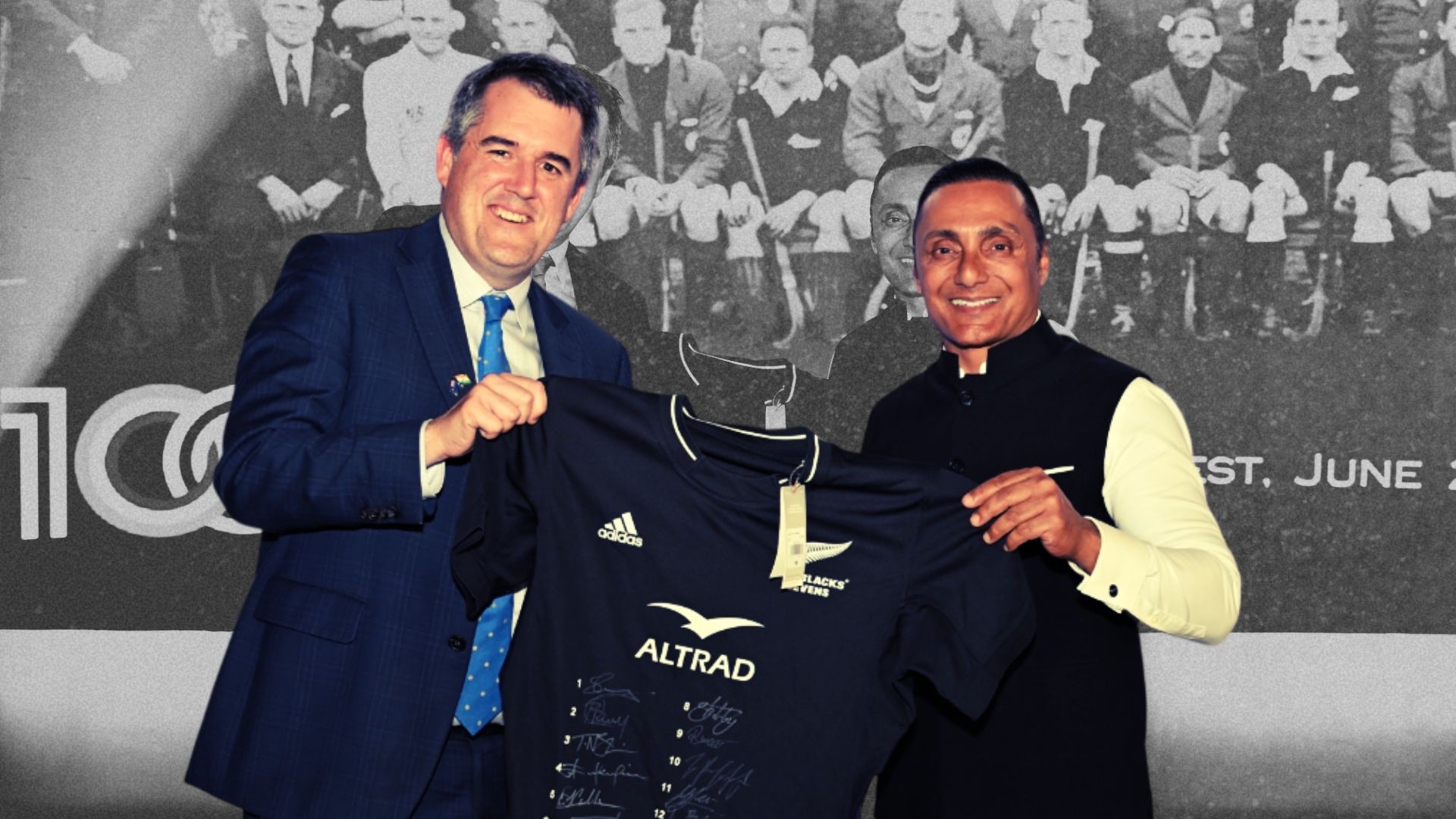
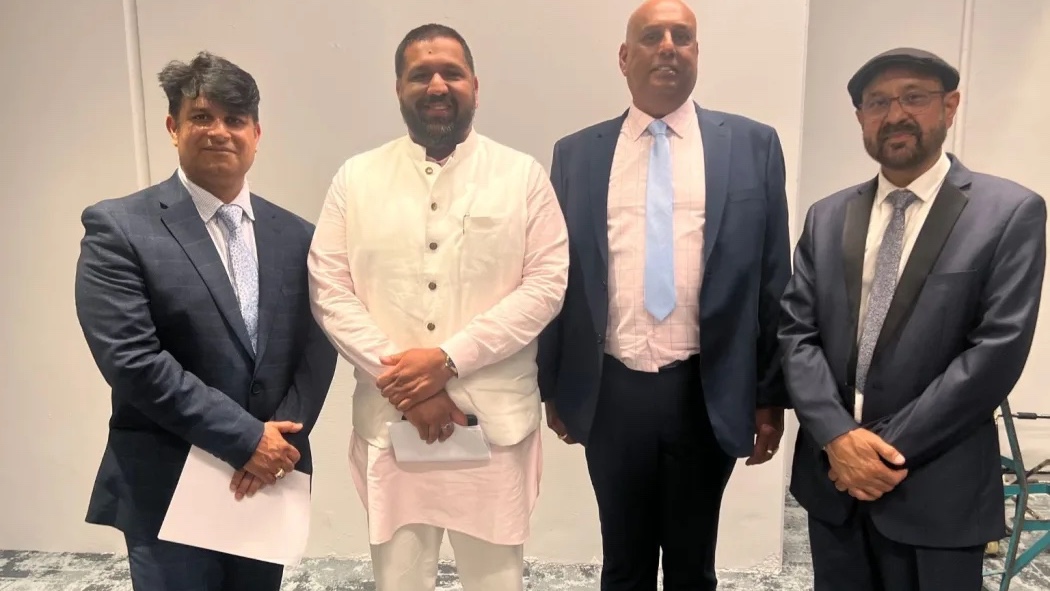
Chris Bishop with Indian rugby's Rahul Bose at the NZ High Commission in Delhi on March 12, 2026. (Supplied photo)
This is no longer an attempt to introduce rugby into a vacuum, India is already warming up to the Kiwi staple.
Rugby is second nature in New Zealand. In India, it barely registers.
On this end of the Indo-Pacific, the All Blacks and the Black Ferns are part of everyday life. In India, sport is cricket’s universe, with hockey somewhere in the distance. Rugby has long lived on the margins. That may be starting to change.
Last year, India launched the Rugby Premier League, the world’s first franchise-based rugby sevens competition, with long-term backing and a structure built for broadcast. Rugby Sevens, as the name suggests, has seven players per side, instead of the traditional 15-a-side contest.
For a sport that has struggled for visibility, it is the closest rugby has come to a professional foothold in the country. That shift has not gone unnoticed in Wellington.
In Delhi earlier this month, Chris Bishop met Rahul Bose, Bollywood actor who has also played for India's national rugby team and headed the country's rugby federation, Rugby India.
South Asian diaspora raises over $200,000 for New Zealanders missing in Nepal flood "I'm so proud of the Indian community here who...supported us, saying it is not a Nepal problem but our problem."
Tamakis launch Indian-origin candidate for Epsom who surrendered passport and has ‘assimilated’ “I know a whole lot of people are going to be like shocked,” says Hannah Tamaki.
Priyanca Radhakrishnan tries to puncture Luxon’s FTA victory, says India was already sold “Things have changed quite dramatically on the Indian government side,” says the Indian-origin Labour MP.
The associate sports minister announced a new collaboration between New Zealand Rugby and Rugby India. The partnership focuses on developing Rugby Sevens in India, marking a new phase in sporting ties between the two countries.
From 2026, New Zealand coaches will work alongside Indian counterparts and youth players, exporting high-performance systems, coaching methods, and pathways that underpin New Zealand’s rugby success.
"This partnership will deepen long-term relationships and foster greater cooperation, supporting broader bilateral objectives between New Zealand and India," Bishop told Awaaz.
What are the odds?
India, for New Zealand, represents both a challenge and an opportunity. Rugby’s roots in the South Asian giant stretch back more than 150 years, when the British introduced the sport in cities like Mumbai and Kolkata. One of the game’s oldest trophies, the Calcutta Cup, traces its origins to a club formed in colonial India.
But unlike in other former British colonies, the sport never embedded itself. After independence, rugby receded, surviving in pockets before slowly rebuilding from the 1990s.
Even today, it remains outside India’s mainstream sporting economy, played largely away from the systems that drive elite sport. For New Zealand, that absence is the opening.
The launch of Rugby Premier League last year suggests that opening may not stay open for long. Rugby’s arrival at this level in India has been late. But it is not trying to catch up the old way. The premiere league is designed to compress what would typically take decades – visibility, structure and aspiration – into a much shorter window.
For New Zealand, that timing matters. This is no longer an attempt to introduce rugby into a vacuum. It is an entry into a system that is beginning to take shape.
New Zealand has made early moves
In the Rugby Premiere League last year, several current and former All Blacks Sevens players featured across teams, while influence extended even to the sidelines. All Blacks Sevens head coach Tomasi Cama led the Delhi Redz franchise to the final, where they were beaten 41–0 by the Chennai Bulls.
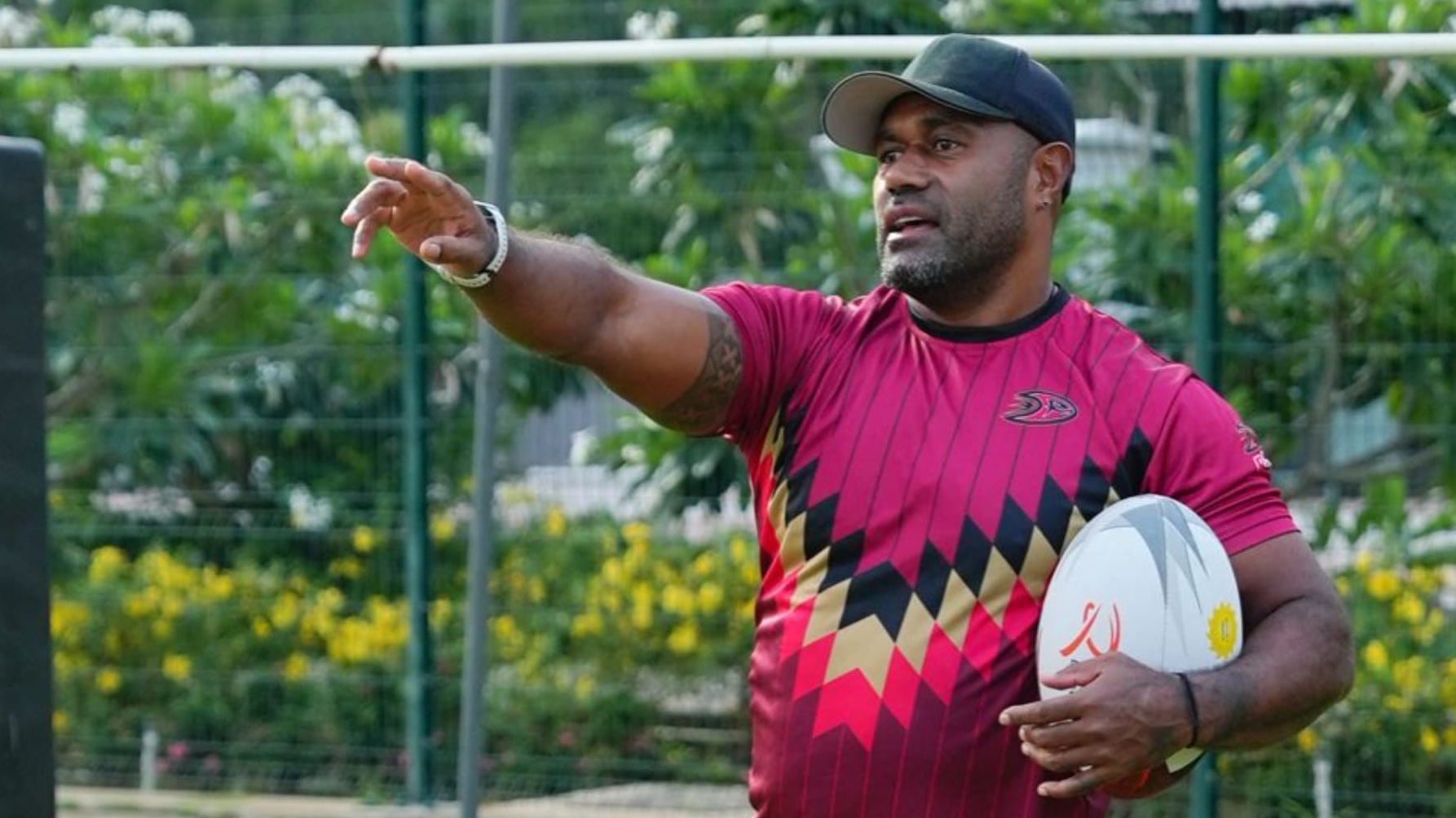
Tomasi Cama during a Delhi Redz practice session for the Rugby Premiere League 2025. (Supplied photo)
That focus on Sevens is deliberate. The 14-minute format is faster and shorter than the full-length 80-minute test. It's also television-friendly, and therefore a better fit for markets where rugby does not yet command attention. For New Zealand, it offers a way in.
India’s women’s team is currently ranked sixth in Asia, while the men’s team sits tenth. The ambition, as Rahul Bose has said, is to reach the Olympics in 2032 and 2036.
For New Zealand, helping build that pathway is part of the play. This sits within a wider strategy.
Last year, Bishop launched New Zealand’s first Sport Diplomacy Strategy (2025–2030), positioning sport as a tool to build relationships, support trade and investment, and expand international engagement.
The partnership with India is a direct expression of that approach.
“The partnership between India and New Zealand is supported by funding from the New Zealand Government,” Bossley Clark said.
Sport, in this context, is not just cultural exchange. It is soft power.
New Zealand has long punched above its weight in sport. The question now is whether that advantage can travel.
With a trade deal now in place between the two countries, sport is emerging as another layer in the relationship — one that operates outside formal negotiations, but alongside them.
The connection itself is not new. In 1926, an Indian Army hockey team toured New Zealand. But what is changing is the intent. New Zealand is no longer just sharing a game. It is no longer trying to introduce rugby to India. It is trying to scale it.