
No smoke, no trace: The hidden cooking traditions of Rajputs and Maori
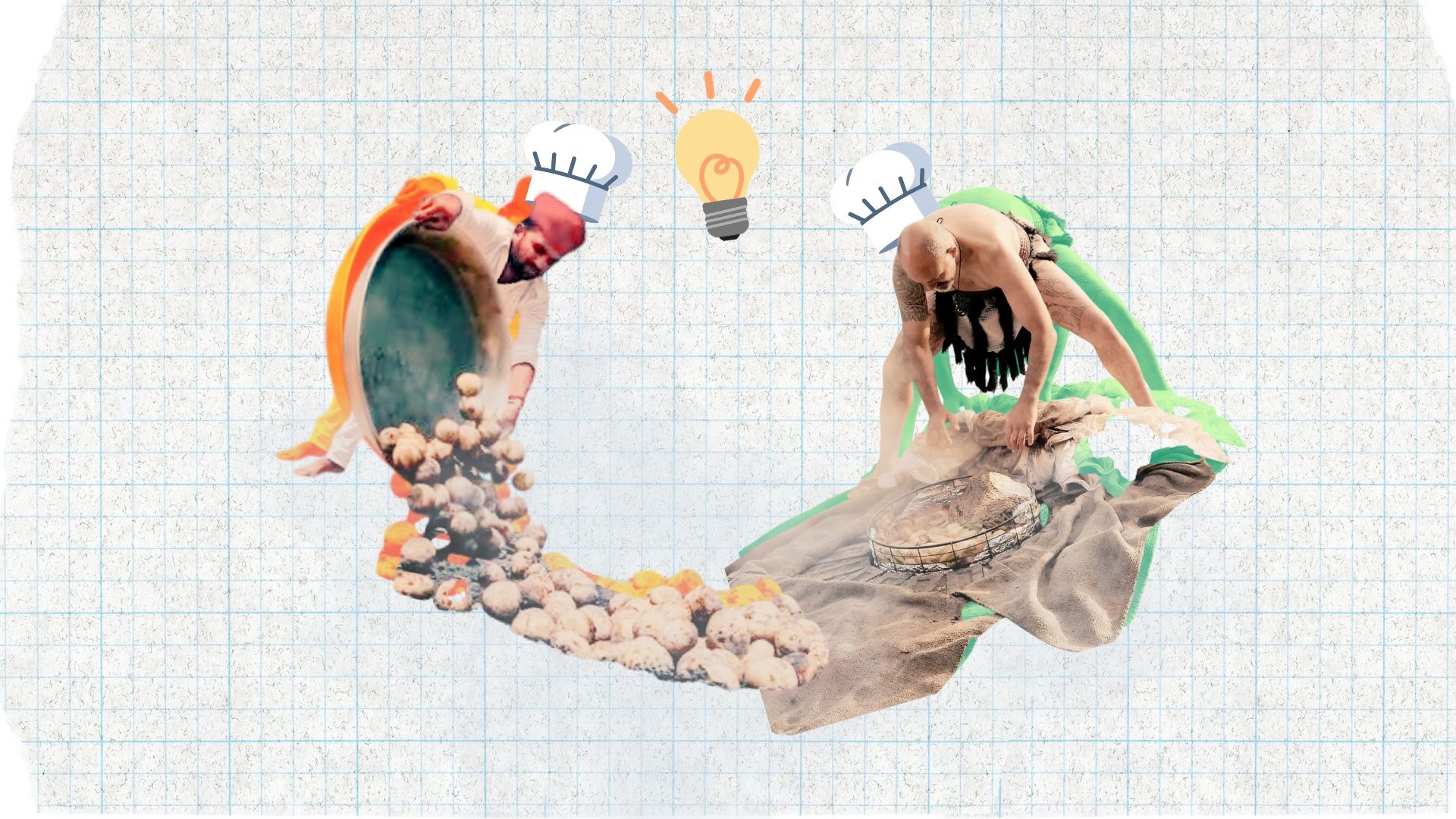
Khad and hangī share similar cooking traditions.
Long before instant meals and neatly packed meal prep became the norm, people relied on resourceful ways to prepare and preserve their food.
Long before instant meals and neatly packed meal prep became the norm, people relied on resourceful ways to prepare and preserve their food.
They fermented to extend shelf life, baked over open hearths, and in some cases, buried their meals beneath the earth, letting time and heat do the work.
Across vastly different landscapes, from the arid deserts of Rajasthan to the geothermal terrains of Aotearoa New Zealand, communities developed strikingly similar methods of cooking.
What ties them together is a shared ingenuity, shaped by mobility, environment, and a deep-rooted connection to the natural world.
Khad of Rajasthan
Selfie: ‘Daddy, please don’t take me to an India-NZ cricket match’. A migrant's dilemma Can a migrant embrace a new home without abandoning old loyalties? Sports often offers a reckoning for migrants.
Migrant prison guards in Auckland accused of drug smuggling can't work, can't go home Two fathers facing serious corruption charges have been unable to work elsewhere because of their visas and awaiting criminal trials in 2028.
Can you be Indian and Kiwi? National's Mahesh Muralidhar on patriotism, racism and belonging National's big ticket Indian-origin candidate on what ethnic representation really achieves and why New Zealanders still struggle to get along.
In the unforgiving heat of Rajasthan, the cooking method known as khad emerged out of necessity.
Rajput soldiers, seeking to avoid detection, prepared their meals underground to conceal smoke and open flames.
By digging pits and covering them with mud or foliage, they were able to cook discreetly without exposing their location.
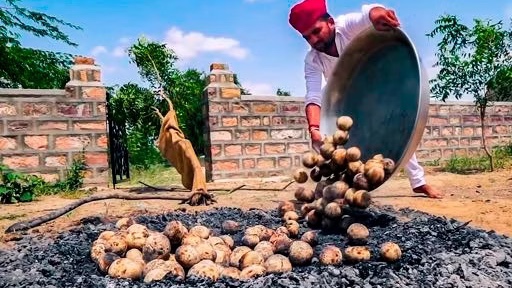
Dal bhaati, cooked underground via the khad technique. (Supplied photo)
This technique was later adopted by Rajput hunters, or shikaris, who used it to prepare game such as wild rabbit, partridges, and boar during royal hunts.
Over time, these hunts evolved into cultural experiences, where hosting guests was not just about the food, but about sharing tradition, skill, and the thrill of the outdoors.
Bhanu Pratap Singh Rathore, who grew up in Udaipur with generations of inherited knowledge, offers a different take on the origins of khad.
In his telling, it began not as a strategy, but as a stroke of luck involving Rajasthan’s beloved bhaati - small wheat dough balls served with ghee.
According to him, soldiers preparing these wheat cakes were suddenly forced to abandon their cooking when enemies approached, leaving the dough buried beneath hot sand.
When they returned a day later, hungry and desperate they unearthed what they assumed would be ruined food. Instead, they discovered something remarkable.
The residual heat of the earth had slowly cooked the dough into a rich, flavourful meal. That moment, he suggests, revealed a powerful idea: the earth itself could be used as an oven.
Over time, this accidental discovery evolved into the method now known as khad.
What began with simple dough soon expanded into meat-based dishes. As Uday Bhan Singh of Overlander India explains, the earliest form was khad khargosh, rabbit cooked underground, owing to the abundance of wild hares hunted by Rajputs.
As hunting laws tightened and practices shifted, lamb gradually replaced game as the preferred choice.
The cooking process itself is deceptively simple, yet deeply considered. A leg of mutton is coated in a robust blend of spices, red chillies with a hint of sweetness, coriander, turmeric, and garam masala.
It is then wrapped in layers: first rotis, followed by banana leaves, sometimes foil in modern versions, and finally a damp gunny sack to prevent burning.
The bundle is placed into a pit, typically two to three feet deep, surrounded by hot coals, then sealed under mud and left undisturbed for hours.
Like any enduring tradition, variations exist. Bhanu prefers young meat for its tenderness and balance of fat, adding mustard oil after marination and layering mint leaves over the rotis for added depth.
In regions like Jaisalmer and Jodhpur, a wild, tangy melon known as kachri is dried and powdered to naturally tenderise the meat.
Today, khad sits on the edge of fading into obscurity. While a handful of establishments continue to preserve the technique, its true presence lingers in rural communities, surfacing occasionally during festivals and special gatherings, where its distinct aroma still drifts through the air.
Hangi in New Zealand
On the other side of the world, the Māori of New Zealand developed their own deeply rooted approach to underground cooking.
The hāngī is far more than a method of preparing food, it is an expression of culture, identity, and connection to the land.
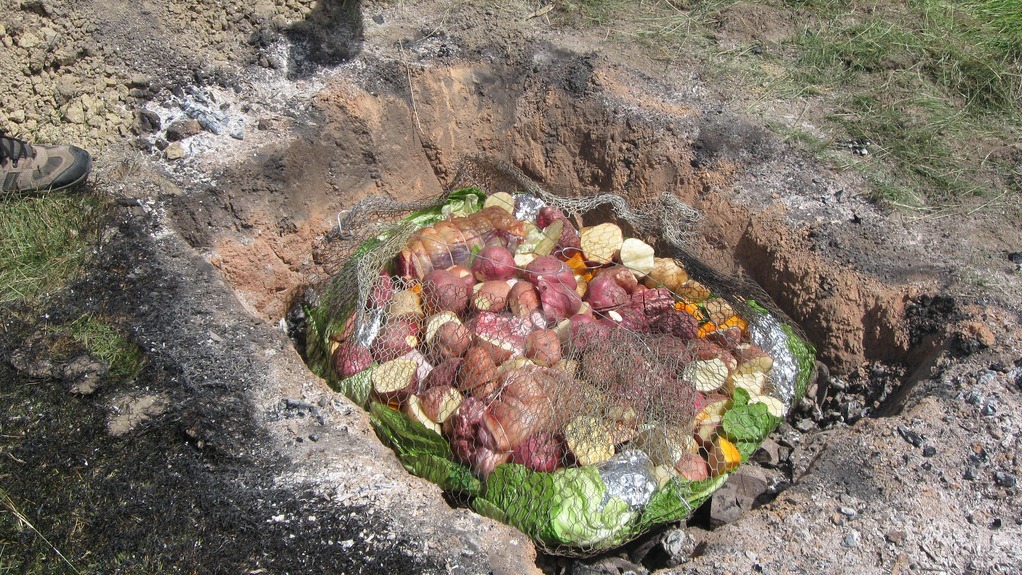
Food being prepared for the hanging. (Supplied photo)
The Māori understanding of cooking extends far beyond the mechanical act of applying heat to food. Their connection to the land runs so deep that cooking becomes an act of communion with the earth itself. In some regions, particularly around Rotorua, they harness the geothermal activity that makes the ground itself hot, using natural steam vents and thermal pools as nature's own pressure cookers.
Piripi Taylor from Ngāti Awa and Te Arawa in the Bay of Plenty actively works on building connections between cultures and specialises in Māori translations and editing articles. He takes us through his process.
A traditional hāngī begins with selecting volcanic rocks that won't shatter under intense heat. A round hole, about half a metre deep, is dug in the ground reserved for cooking.
The pit gets filled with tinder and kindling, then larger logs stacked to burn for at least three hours. River stones or lava rocks are stacked on top, heated until they glow like angry stars.

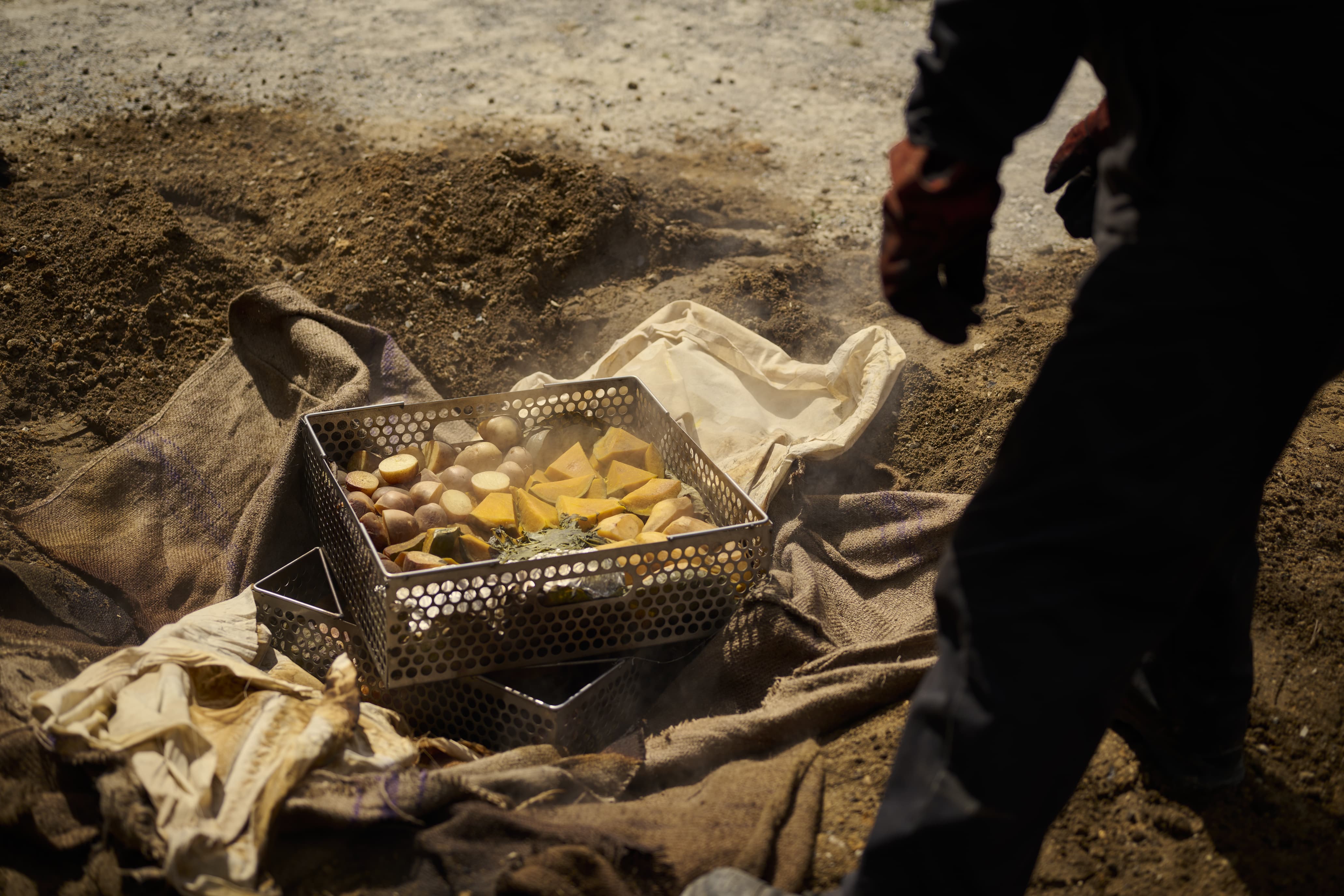
Lowering food into the hāngī pit. (Supplied/Te Puia)
Once the wood burns off and ash settles to the bottom, baskets of kai are placed over the red-hot stones.
The feast typically includes meat like lamb, pork, chicken or beef—wrapped in tin foil, stacked with vegetables like potatoes, kūmara, pumpkin, taro and cabbage, with loads of bread stuffing, all held in mutton cloth pouches.
Everything gets covered with large taro leaves or wet potato sacks, water triggers intense steam, then the pit is sealed with sheets and earth. After three to four hours, the earth opens to reveal the feast.
For Piripi’s family, hāngī are always associated with special occasions and large gatherings, ranging from birthdays, funerals, weddings or Christmas.
“Hāngī and umu are very special and well-loved by Māori. I have made hāngī for all my children's 21st birthdays and numerous other occasions, the last being for my family Christmas feast, which I hosted in the backyard of where I live in Ohiwa Beach”.
The preparation itself is ceremonial, with everyone pitching in to dig the pit, arrange the food, and share stories while waiting for the feast to emerge. It's community building, quite literally from the ground up.
Today, it remains a cornerstone of Māori hospitality, featured at marae (meeting grounds) across New Zealand and increasingly popular at festivals and special events where Pākehā (non-Māori) New Zealanders get to experience this ancient cooking method.
The similarities between khad and hāngī are striking—both produce distinctive smoky, earthy flavours and demand patience and faith in unseen processes.
Yet their differences reveal how environment shapes culture: khad emerged from desert warfare's need for concealment and a means of cooking game meat, while hāngī grew from communal gathering and geothermal abundance.
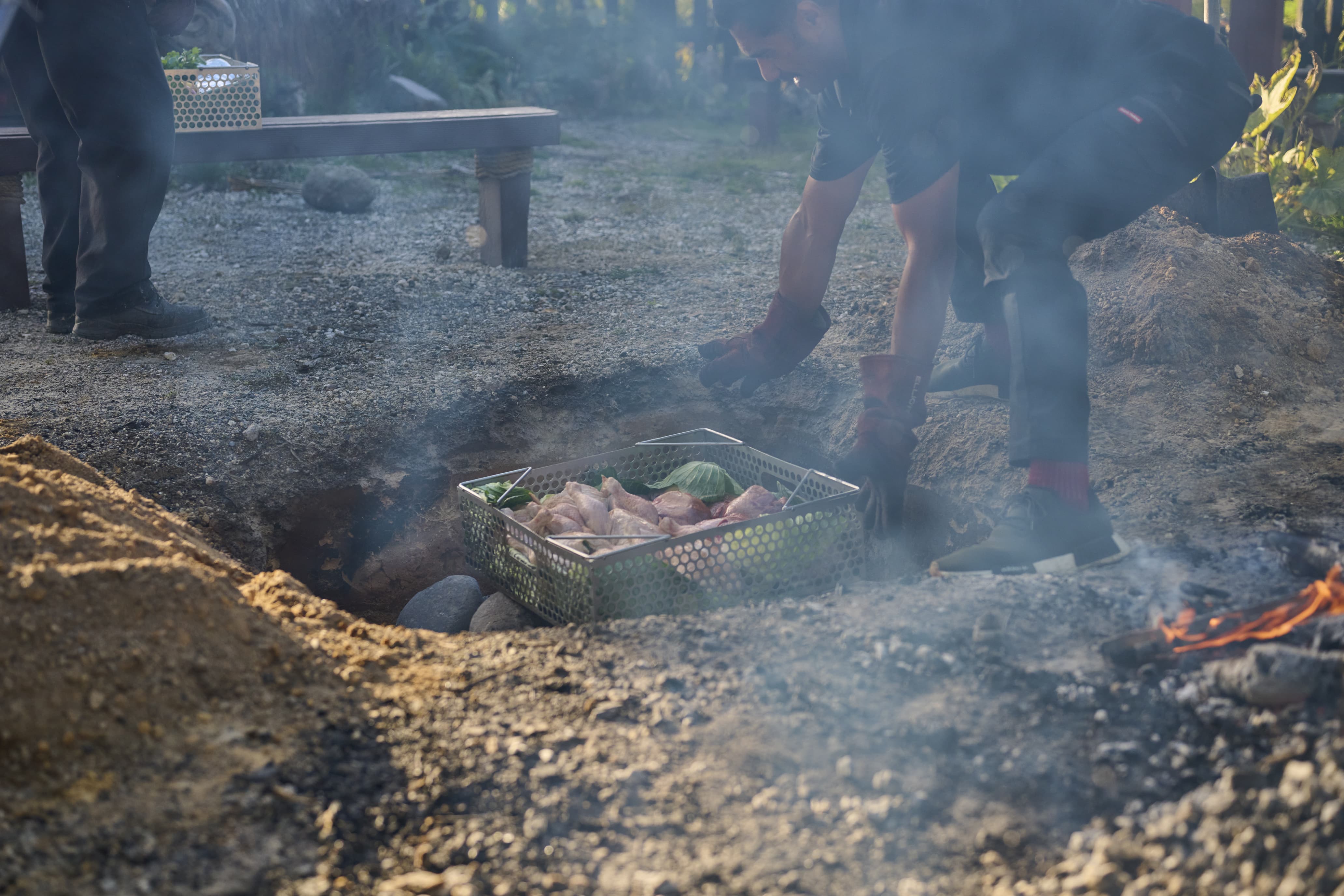
Earth ovens such as hāngī (pictured) and khad have been used throughout human history. Image: (Supplied/Te Puia)
But these two traditions are also part of a bigger story. Across the globe, humans have independently discovered the earth's potential as an oven. Bedouin zarb adapts to Arabian desert conditions using hot stones and sand. Hawaiian imu creates the tender, smoky meat for luaus, with pork wrapped in ti leaves and steamed underground for hours.
In the Andes, pachamancaemploys volcanic stones to slow-cook llama, cuy and potatoes layered with herbs for communal feasts. Mexican barbacoa transforms lamb and beef into melt-off-the-bone delicacies in agave leaf-lined pits.
This technique runs so deep in human DNA that archaeologists consider earth ovens one of the first markers of early civilisation. Some food historians theorise that as nomadic tribes settled, these earth ovens evolved into permanent clay structures, probably eventually giving birth to the mud ovens like the tandoors of India.
It is closely tied to values such as whakapapa (genealogy), whenua (land), and manaakitanga (hospitality).
For Māori communities, cooking is not merely functional. It is relational.
The act of preparing food becomes a form of engagement with the earth itself.
In geothermal regions like Rotorua, this relationship is even more literal, with natural steam vents and heated ground used as cooking sources.
Piripi Taylor of Ngāti Awa and Te Arawa, who works in cultural preservation and language, describes the process with clarity and care.
A traditional hāngī begins with selecting stones that can withstand extreme heat. A pit is dug, filled with wood, and left to burn for several hours until the stones above are intensely heated.
Once the fire burns down, baskets of food are placed over the hot stones.
These typically include meats such as lamb, pork, chicken, or beef, alongside vegetables like potatoes, kūmara, pumpkin, taro, and cabbage.
Everything is layered, wrapped, and covered, often with leaves or damp sacks, before being sealed with earth.
Water added to the pit creates steam, and over the next few hours, the food cooks slowly and evenly.
For many families, hāngī is inseparable from significant occasions, birthdays, funerals, weddings, and communal celebrations.
The preparation itself is a shared effort, bringing people together to dig, assemble, and wait. It is as much about connection as it is about the meal.
Today, hāngī remains central to Māori hospitality. It is commonly prepared at marae and cultural events, offering both locals and visitors a chance to experience a tradition that has endured for generations.
Despite their differences, khad and hāngī share a striking similarity: both rely on patience, trust, and the transformative power of the earth.
Each produces a distinct depth of flavour—smoky, tender, and layered while reflecting the environment from which it emerged.
Where khad speaks of concealment and survival in desert landscapes, hāngī reflects abundance, community, and geothermal richness.
Yet these traditions are part of a much broader global pattern. Across cultures, earth ovens have appeared independently, shaped by local conditions.
In the Middle East, zarb uses sand and coals to cook meat underground. In Hawaii, the imu produces slow-cooked dishes central to communal feasts.
In the Andes, pachamanca layers meat and vegetables between heated stones, while Mexican barbacoa transforms meat into tender, deeply flavoured dishes in agave-lined pits.
So widespread is this method that archaeologists consider earth ovens among the earliest indicators of organised human life.
Some historians even suggest that these early techniques eventually led to the development of structured clay ovens, such as the tandoor.
At its core, this way of cooking reflects something fundamental: a time when food, land, and community were inseparable and when the earth itself was trusted to do the work.
(This article was originally published by the Asia Media Centre.)