
Māori delegation eyes deeper business, cultural ties with India
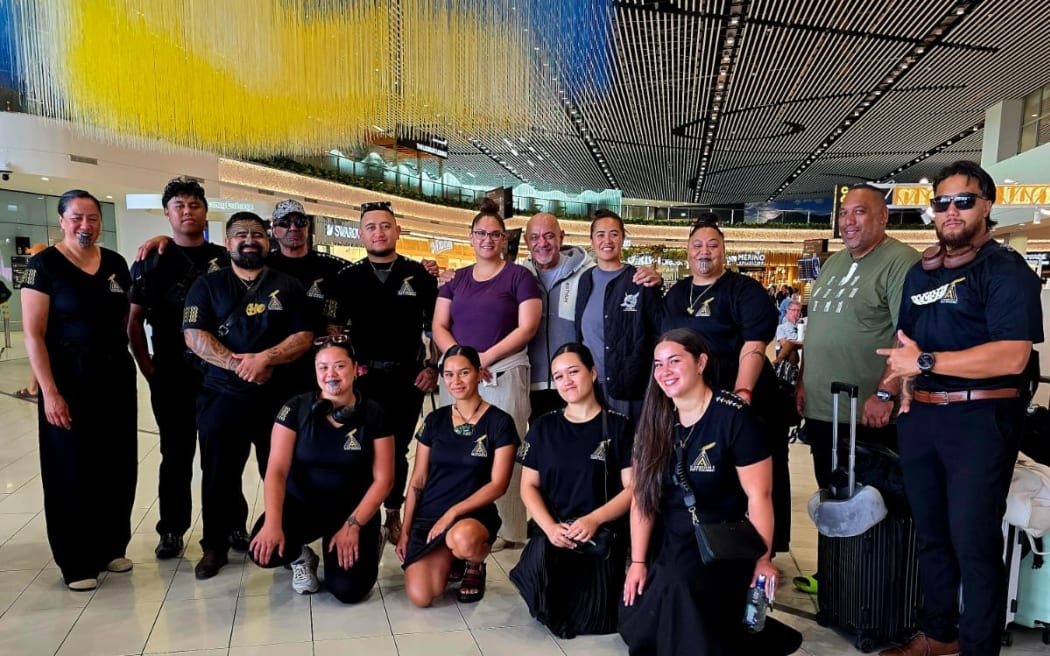
A 20-member Māori delegation is travelling to India just weeks after New Zealand and the South Asian nation announced the conclusion of free trade negotiations. (Photo: Supplied)
A Māori delegation of business and community leaders, chefs, educators and a kapa haka group is travelling to India this week in a bid to explore business opportunities and deepen cultural ties.
A group of Māori business figures, community representatives, educators, chefs and performers is heading to India this week, aiming to open new commercial pathways while strengthening cultural connections.
The delegation, made up of around 20 members, began departing on Sunday, with others following later in the week. The visit is being described as the first Māori-led delegation to India where cultural exchange sits at the centre of the mission. It follows the recent announcement that India and New Zealand have finalised free trade agreement negotiations, after talks resumed in March 2025.
India’s consul general in Auckland, Madan Mohan Sethi, said the timing of the visit was notable, even if it was not formally tied to the trade deal.
“This is the first occasion on which a Māori delegation that includes both cultural performers and business representatives has travelled to India,” he said, adding that Māori enterprises play a key role in New Zealand’s trade and economic landscape.
Delegation organiser Hopa said the inclusion of respected community leaders, such as Tracey and David Panapa of Te Māhurehure Marae in Point Chevalier, alongside kura kaupapa Māori principals, brought an added layer of purpose to the trip.
From designing restaurants to running Auckland Diwali: The many lives of Arnav Taode Taode brings his passion for Indian arts and culture to his first year managing BNZ Auckland Diwali 2026.
Winston Peters says ‘diversity is disunity’. What does the evidence tell us? Evidence from business, sport and social policy suggests diversity can strengthen economies and cohesion but on one condition.
Baby born in Sri Lanka to New Zealand residents caught in limbo after Down syndrome diagnosis Immigration tribunal orders fresh residence assessment after finding a “serious mistake” by immigration officials.
“It creates space to look at how culture can move beyond performance and education, and how those values can be shared through international engagement,” he said.
"The 20-member delegation is the first ever Māori-led delegation to India with culture in the forefront," Hopa said. Hopa said the group included iwi and community leaders, chefs, business representatives and members of the Whiria Collective. He said India remained an important and largely untapped market for Māori businesses.
The Aotearoa Bharat Economic Foundation was formed in 2015 after its founders, Ram Kumar Bhargava and Tiopira Rauna, noticed Māori businesses were often missing from trade discussions involving India.
Chief executive Kush Bhargava said the foundation was set up to build stronger people-to-people and business links between the two countries, particularly at a grassroots level.
The delegation included prominent Māori chefs Hera Te Kurapa and Irihei Walker, as well as kapa haka group Te Pikikōtuku o Ngāti Rongomai, which led cultural exchanges through dance and storytelling.
“Large corporations usually find a way into the Indian market,” he said. “For smaller businesses, access and visibility are the real hurdles.”
Hopa said the presence of community leaders such as Tracey Panapa and David Panapa from Te Māhurehure Marae in Point Chevalier, as well as Māori educators who are principals of kura kaupapa Māori, added depth to the delegation.
"It allows us to explore how culture transcends education and how that can be shared as part of this exchange," he said.
Meanwhile, Wellington-based Aotearoa Bharat Economic Foundation (ABEF), which has been facilitating Māori and New Zealand delegations to India since 2016, said the recently concluded FTA could be a turning point for smaller businesses.
The foundation was established in 2015 after its founders, Ram Kumar Bhargava and Tiopira Rauna, identified that Māori businesses were often excluded from trade organisations engaging with India.
"The foundation was created with the objective of strengthening bilateral relations and promoting meaningful collaboration between India and New Zealand and we took delegations to India to connect grassroots level companies in India and New Zealand," ABEF chief executive Kush Bhargava said.
"Big companies can always penetrate the Indian market. For small companies, that's the real challenge."