
Hawke’s Bay to Mumbai: The New Zealand apple that sold out in a day
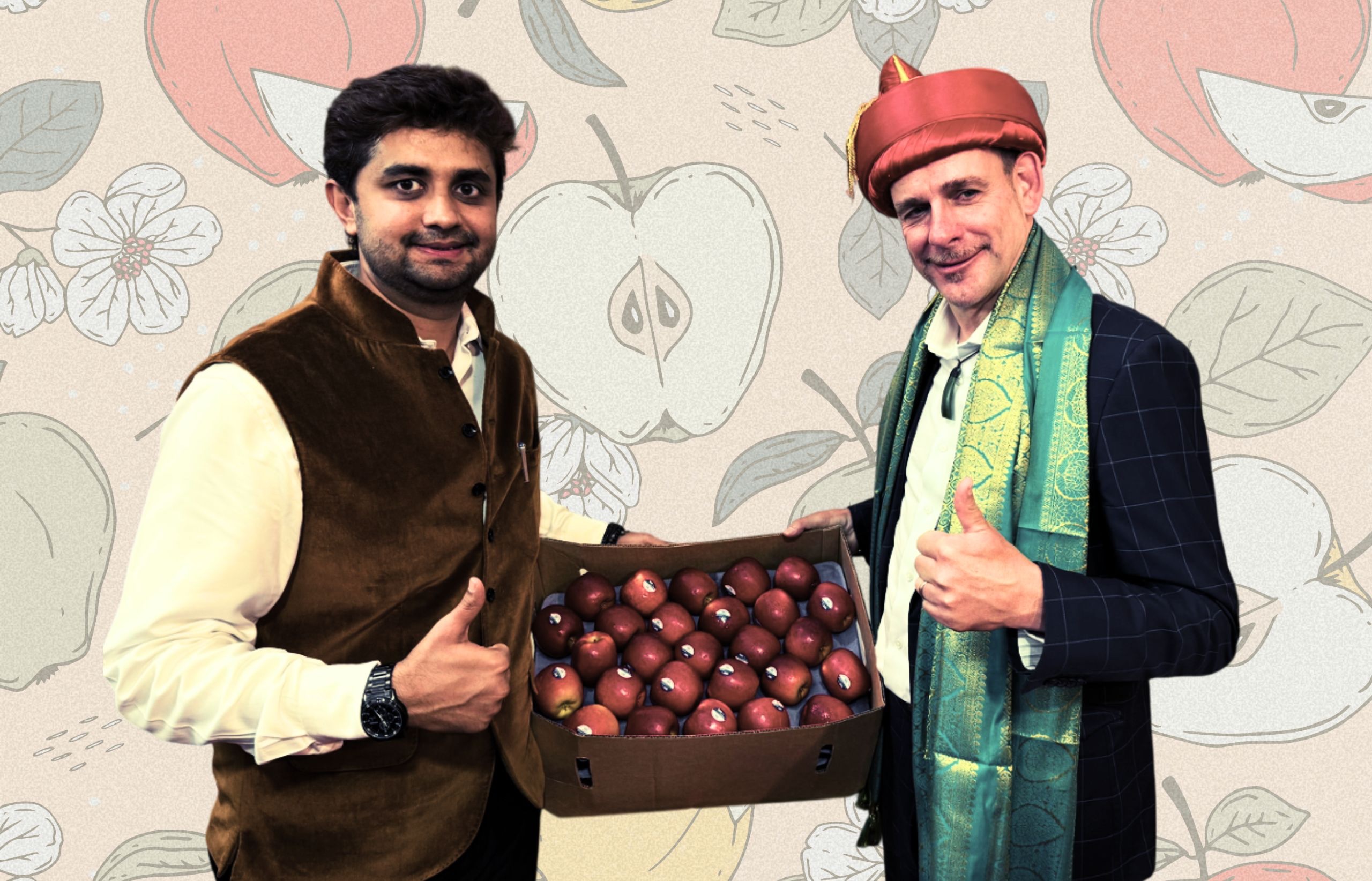
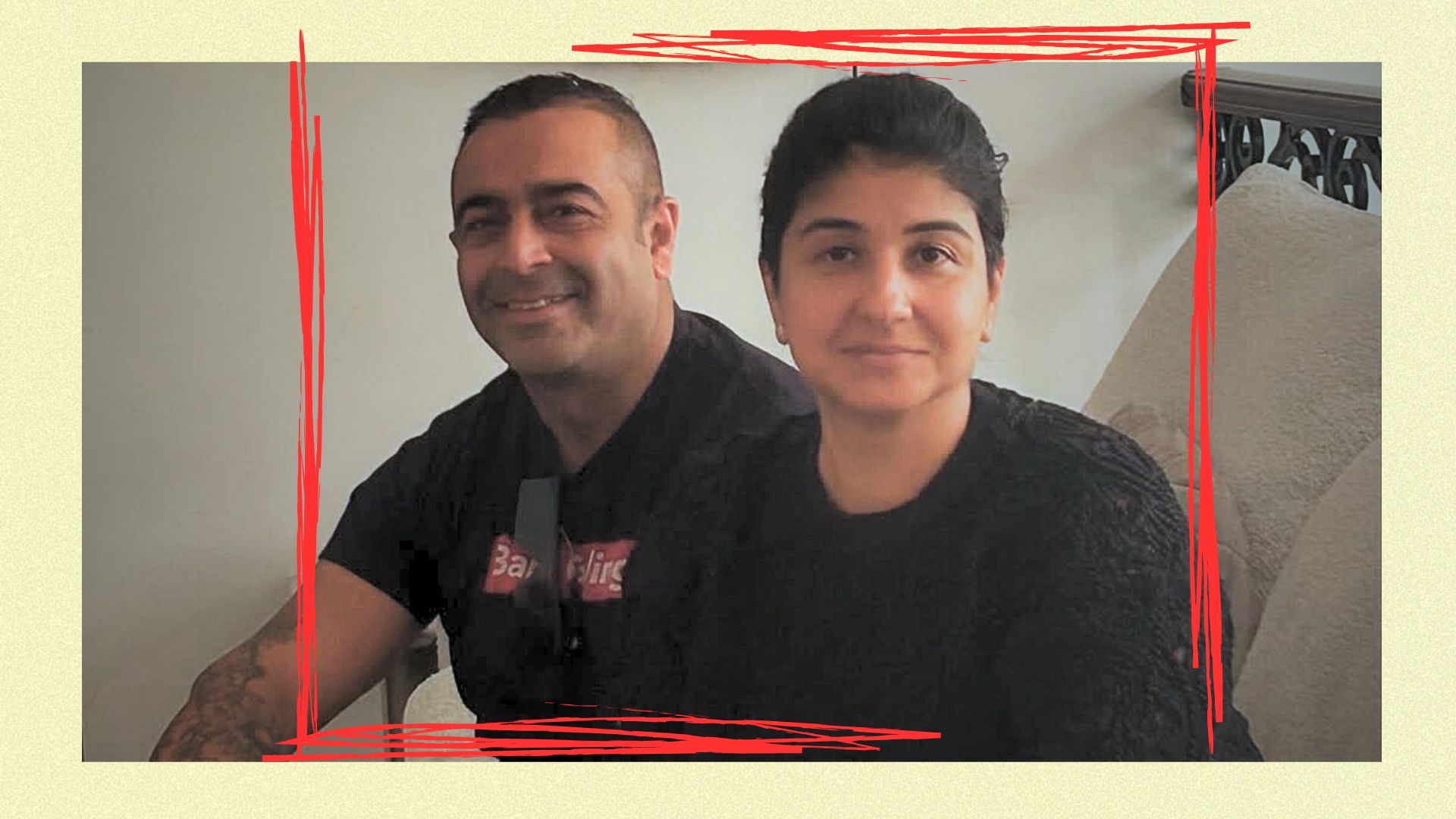
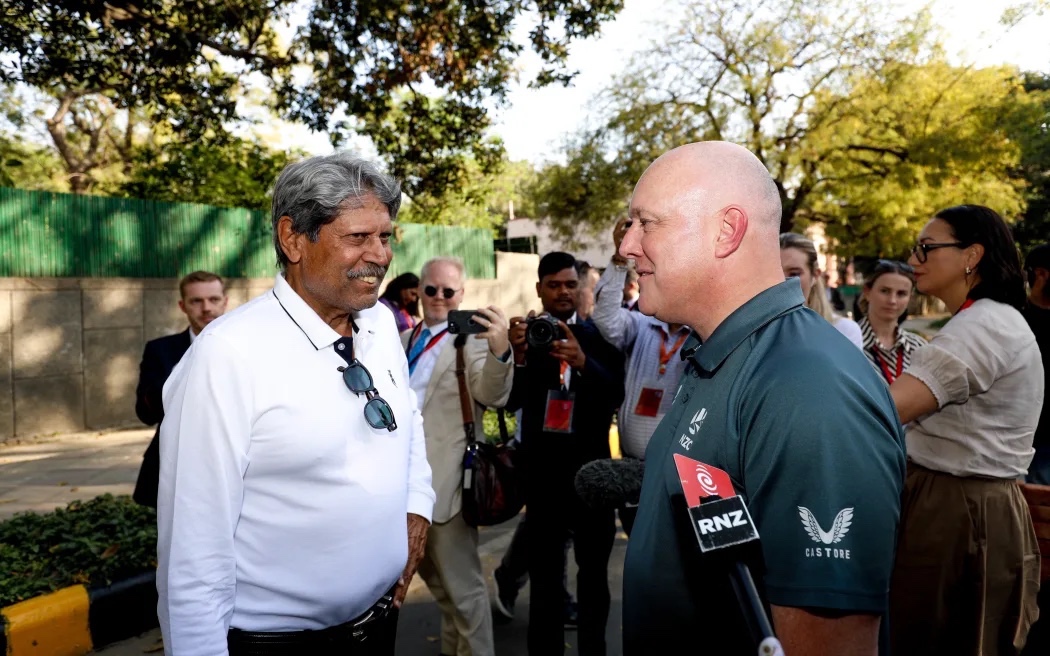
Rohan Satish Ursal and NZ Consul General for India Graham Rouse. (Rohan Satish Ursal).
"The Rouge variety of apple ticks all the boxes for the Indian palate – vibrant crimson skin, satisfying crunch and high sweetness level."
In the sprawling, fast-paced wholesale markets of India, success is measured in speed. For a new premium fruit to make its debut and sell out is rare. For it to happen in a single day is exceptional. Yet that is precisely what occurred when the first container of a new variety of New Zealand apple, the Rouge from Hawke’s Bay, recently arrived in India.
The entire premium-grade stock, part of a 21,000-kg shipment, was gone by day’s end on its debut in October 2025, a remarkable feat in one of the world's most competitive produce markets.
The architect of this success is Rohan Satish Ursal, a fourth-generation fruit trader from Pune. His story, however, is not one of overnight luck. It is a methodical, three-year journey of research, strategic relationship-building, and a deeply held belief in cultural respect.
A legacy in fruit and a vision sparked abroad
Rohan Ursal’s life is deeply rooted in the fruit trade. His family has been in the business for over 120 years, a legacy that provided him with an unparalleled, ground-level education in the industry's intricate workings. But it was a trip far from the familiar markets of Pune that would fundamentally alter his professional trajectory. While completing his MBA, he attended Fruit Logistica in Berlin, one of the world's largest fresh produce trade fairs.
From designing restaurants to running Auckland Diwali: The many lives of Arnav Taode Taode brings his passion for Indian arts and culture to his first year managing BNZ Auckland Diwali 2026.
Winston Peters says ‘diversity is disunity’. What does the evidence tell us? Evidence from business, sport and social policy suggests diversity can strengthen economies and cohesion but on one condition.
Baby born in Sri Lanka to New Zealand residents caught in limbo after Down syndrome diagnosis Immigration tribunal orders fresh residence assessment after finding a “serious mistake” by immigration officials.
"What I saw there was a completely contrasting picture of what I used to see here in India," Rohan recalls. He observed that the most successful international farmers were not merely cultivators; they were astute marketers and businesspeople who controlled their product's narrative from the orchard to the global consumer.
He returned to India inspired to bridge this gap. He founded Purandar Highlands Farmers Producer Company, a farmer cooperative in his home region, with the ambitious goal of helping smallholder farmers export their highly perishable local fruits, like figs and custard apples.
This hands-on experience solidified a business philosophy that would become his guiding principle: reciprocity. "My perspective was that it should always work on a give-and-take basis," he asserts. He concluded that to build sustainable export channels for Indian farmers, he first needed to create robust inbound channels for international farmers.
His focus turned to New Zealand, a country he had long admired. For three years, he studied its advanced agricultural economy and its deep-rooted cultural traditions, which he felt shared a kinship with India. He saw a potential partner, and he began to wait for the right opportunity to turn his research into reality.
The catalyst: A foundation for partnership
That opportunity arrived when Rohan was selected to be part of the first-ever Indian delegation for the Asia New Zealand Foundation's New Zealand India Entrepreneurship Initiative (NZIEI).
His "homework" began months before he boarded the plane. He reached out to New Zealand Trade and Enterprise (NZTE) officials in Mumbai, securing meetings with the team and even the Consul General, Mr. Graham Rouse. He also began initiating contact with potential exporters in New Zealand, laying the groundwork for the meetings he hoped to have.
Rohan describes his 15-day trip less as a business tour and more as a "great grooming session" that provided deep insights into the country's culture and business etiquette. This cultural immersion was, in his view, the essential first step. "I feel understanding the tradition and culture first and then moving into the trade... gives you a long-lasting relation," he notes.
He added that the credibility that came with his association with the Asia New Zealand Foundation was a critical factor. For a new, independent entrepreneur from India, breaking into the established New Zealand export market is a formidable challenge. "No one would believe me as an importer, because there are already 15-20 people out there who were working for 20-25 years," he admits.
Demonstrating his commitment, Rohan extended his stay in New Zealand at his own expense after the official tour concluded. He used that time to diligently follow-up with the contacts he had nurtured, which led directly to a pivotal meeting with Bearsley Exports Limited New Zealand, a family-owned apple company in Hawke's Bay that shared his forward-thinking vision.
The strategy in action: The rouge apple launch
India’s fruit markets are already saturated with imported premium apples from places like the United States, and even New Zealand apples are no longer a novelty. Yet Rohan’s decision to introduce the Hawke’s Bay Rouge apple stood out as a masterclass in strategy.
First was the product selection. He needed a fruit that was not only new but perfectly suited for the Indian consumer. "Indians have a very specific taste palate," Rohan explains. "People love sweet apples. They like crunchy apples, and the red colour is something that is very attractive to them. The Rouge apple ticked all these boxes with its vibrant crimson skin, satisfying crunch, and high sweetness level".
Equally important was its robust shelf life, a non-negotiable trait for any produce undertaking the 50 to 60-day sea transit from New Zealand to India. Rohan confirms, giving full credit to the New Zealand farmers. To validate this, he had even arranged for sample boxes to be flown in by air cargo beforehand to conduct his own quality tests.
Second was the launch strategy. Rohan eschewed a conventional corporate event in a sterile hotel ballroom. Instead, he took the apples directly to the heart of the industry: the APMC wholesale market. This unconventional move was a powerful gesture of respect for the ecosystem of vendors, wholesalers, and labourers who are the true gatekeepers of the retail market.
He wanted the launch to be "a celebration with the people... who should acknowledge this fruit". The strategy worked. The premium-grade apples were snapped up by wholesalers, setting a resoundingly positive tone for the future.
Third was the market testing. The first container was not merely a sale; it was a sophisticated research operation. He imported not just the premium grade but also other grades and sizes to test the market's appetite. He then distributed these apples to partners in five different states—Delhi, Gujarat, Madhya Pradesh, Telangana, and Tamil Nadu—to gather feedback and lay the groundwork for a comprehensive national strategy.
Scaling Success and Deepening Ties
While the one-day sell-out is a headline-grabbing achievement, Rohan is quick to put it in perspective. "Six months sounds really very good," he says, "but I think it's a three years long research that I have been doing on New Zealand". This is the central lesson of his journey: success is not spontaneous; it is cultivated through diligence and patience.
His approach is also guided by a deep-seated ethical framework, inherited from his family. He shares a teaching from his great-grandfather: "If the full bread is served on your plate, consider that half of the bread is owned by the farmer and only half of it is owned by you".
Building on this initial success, Rohan plans to scale the import volume from one container to five next year with Bearsley Exports, focusing on sustainable, steady growth rather than explosive, risky expansion. He is also actively exploring other premium New Zealand products, such as cherries, and continues to seek out New Zealand producers who have not yet entered the Indian market, believing he can offer them a trusted and effective pathway.
Perhaps the most poignant symbol of his journey’s impact is not found in a shipping manifest, but on the label of a new product from his own cooperative back in India. Purandar Highlands is preparing to launch a new line of juices made from indigenous figs and fruits grown by local farmers. The brand name he chose is Taroi (pronounced as "ta-wee")—inspired by his trip to New Zealand and his fascination with the country’s indigenous culture.
"Taroi is one word that I stumbled upon, which means 'to blend' in Māori," Rohan shares with evident pride. The product's tagline beautifully encapsulates his entire story: "Rooted in Purandar soil and inspired by New Zealand spirit". It is a perfect, full-circle tribute—a word from the indigenous people of Aotearoa now gracing a product designed to uplift the farmers of Maharashtra.
(The writer is a media adviser at the Asia Media Centre in Auckland. A former international affairs correspondent for TV5 Network and Bloomberg TV Philippines. This story was first published in Asia Media Centre.)