
India's IITs are quietly stitching New Zealand into their global network
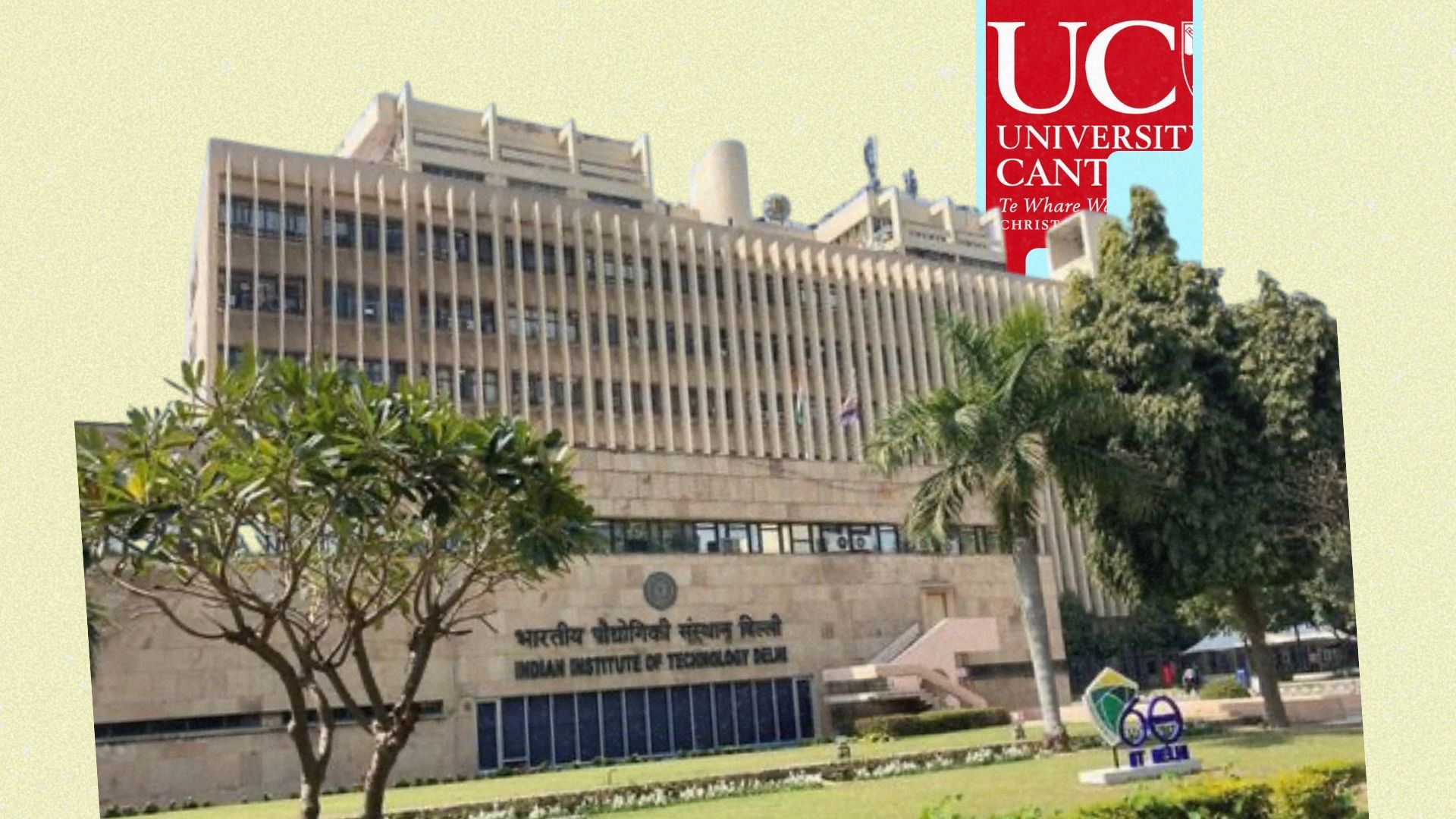
The Indian Institute of Technology is one of India's premiere institutes.
A new deal between IIT Madras and University of Canterbury is the latest sign of a deeper shift set in motion during Luxon’s India visit.
A new agreement between Indian Institute of Technology (IIT) Madras and University of Canterbury will allow students from the storied Indian institute to progress into postgraduate programmes in New Zealand, including a Master of Applied Data Science.
The memorandum of understanding, signed this week, also covers faculty exchanges, joint research, co-teaching and academic engagement through conferences and seminars.
For students enrolled in IIT Madras’s undergraduate programmes, particularly its large-scale data science degrees, the arrangement creates a defined pathway into New Zealand’s higher education system.
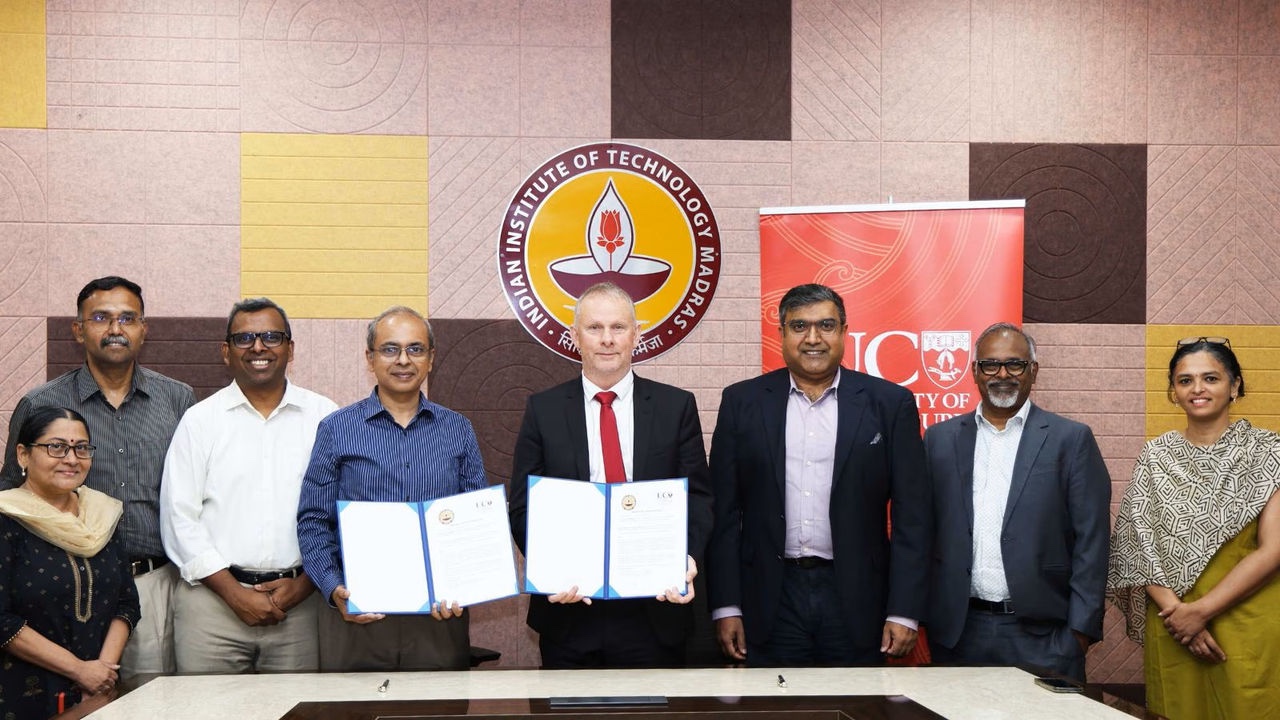
Officials sign the memorandum of understanding. (Supplied photo)
Under this model, eligible students will complete their BS degree at IIT Madras and, upon meeting academic requirements, apply for postgraduate admission at the partner university. Selected candidates will then progress to the master’s programme, creating a continuous academic track from undergraduate to postgraduate study.
Both institutions will also explore expanding online and hybrid learning models. This includes offering courses through platforms like SWAYAM, NPTEL and NPTEL+ to increase access to academic content.
Selfie: ‘Daddy, please don’t take me to an India-NZ cricket match’. A migrant's dilemma Can a migrant embrace a new home without abandoning old loyalties? Sports often offers a reckoning for migrants.
Migrant prison guards in Auckland accused of drug smuggling can't work, can't go home Two fathers facing serious corruption charges have been unable to work elsewhere because of their visas and awaiting criminal trials in 2028.
Can you be Indian and Kiwi? National's Mahesh Muralidhar on patriotism, racism and belonging National's big ticket Indian-origin candidate on what ethnic representation really achieves and why New Zealanders still struggle to get along.
The Centre for Outreach and Digital Education (CODE) at IIT Madras will serve as the nodal body for coordinating activities under the partnership, including digital programmes and outreach efforts.
The agreement builds on groundwork laid during Christopher Luxon's visit to India in 2025, where education featured prominently alongside trade and investment discussions.
University of Auckland signed a flagship agreement with IIT Delhi covering joint research, doctoral training and student mobility, anchoring New Zealand’s engagement with India’s top-tier technical ecosystem. The visit to IIT Delhi, the only higher-education campus on the prime minister's itinerary, became the focal point for a broader set of education announcements involving all eight New Zealand universities.
Other universities advanced ties with a wider mix of Indian institutions. Victoria University of Wellington progressed collaborations with partners like Jawaharlal Nehru University and Indian Institute of Public Administration in public policy and governance.
University of Waikato and Massey University deepened engagement with Indian engineering and applied science institutions, including Amity University and Vellore Institute of Technology.
What distinguished those agreements was not just their number, but their structure. Rather than focusing solely on recruitment, they emphasised co-designed programmes, shared research supervision and clearly defined student mobility pathways that link undergraduate study in India with postgraduate opportunities in New Zealand.
This week's IIT Madras-Canterbury partnership extends that approach. The IITs remain among the most selective and globally recognised institutions in India, particularly in engineering and technology.
For New Zealand universities, aligning with IITs provides access to high-performing student cohorts at an earlier stage of their academic journey, reducing reliance on competitive international recruitment at the point of graduation.
At the same time, IIT Madras has expanded its undergraduate reach through hybrid and online programmes, particularly in data science, enrolling large cohorts of students domestically. The Canterbury pathway effectively sits on top of that scale, allowing a subset of students to transition into New Zealand for specialised postgraduate study.
For New Zealand, such arrangements offer a more predictable pipeline of international students at a time when competition from Australia, Canada and the United Kingdom remains intense.
More broadly, they point to a shift in strategy, from attracting students at the end of the pipeline to embedding New Zealand within the pipeline itself.
The cluster of agreements signed during Luxon’s visit suggested a more coordinated approach to India, with universities aligning around long-term institutional partnerships rather than standalone deals.
The IIT Madras agreement adds to that pattern, positioning New Zealand as part of a growing network of cross-border education pathways anchored in India’s elite institutions.
In that sense, the latest partnership is less an isolated development than a continuation of a trend that began to take shape last year. One that is gradually bringing New Zealand into the expanding global footprint of the IIT system.