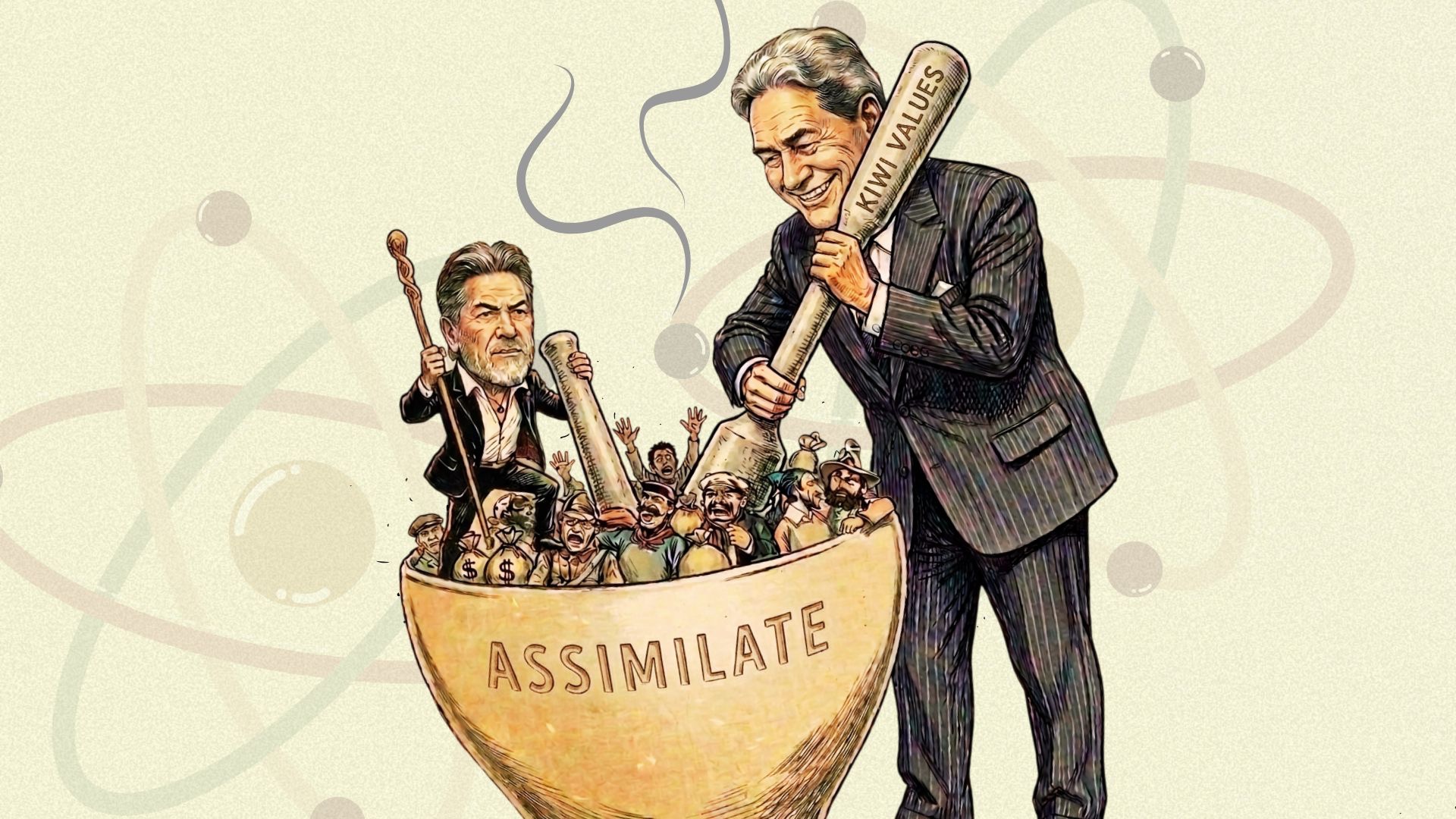

Gone in 4 years: Wealthy migrants, including Indians, are leaving New Zealand

For Indian migrants, this issue has an added layer.
For wealthy migrants, New Zealand’s four-year tax window is both an invitation and an exit plan.
For decades, countries like New Zealand have marketed themselves as stable, clean, well-governed destinations for global talent and capital. For many Indian entrepreneurs, professionals, and investors that promise has been real.
But increasingly, there is a quiet contradiction emerging in how that promise is structured.
New Zealand offers new migrants what is effectively a four-year tax holiday on most foreign income. For globally mobile individuals, this is an attractive entry point. It lowers friction and makes relocation viable.
At the end of four years, everything changes. At that point, New Zealand shifts to taxing worldwide income. For someone with offshore assets, this is not a marginal adjustment but rather a fundamental change in their financial position. The result is predictable, even inevitable. Many leave.
Chartered accountants and immigration advisers are increasingly warning that New Zealand’s tax settings may be working against its own migration strategy.
Selfie: ‘Daddy, please don’t take me to an India-NZ cricket match’. A migrant's dilemma Can a migrant embrace a new home without abandoning old loyalties? Sports often offers a reckoning for migrants.
Migrant prison guards in Auckland accused of drug smuggling can't work, can't go home Two fathers facing serious corruption charges have been unable to work elsewhere because of their visas and awaiting criminal trials in 2028.
Can you be Indian and Kiwi? National's Mahesh Muralidhar on patriotism, racism and belonging National's big ticket Indian-origin candidate on what ethnic representation really achieves and why New Zealanders still struggle to get along.
In a recent Newsroom report, Chartered Accountants Australia and New Zealand said current rules are imposing “disproportionately high costs on migrants”, particularly those with offshore assets.
Its New Zealand tax leader, John Cuthbertson, pointed to migrants reconsidering their future as they approach the end of the four-year transitional tax period. “There are people… looking to leave because of the tax settings that aren’t attractive,” he said, with the body proposing a longer window to improve retention.
The problem
Public policy often confuses intention with outcome. Governments want long-term residents who contribute economically and socially. But incentives shape behaviour far more than messaging does.
If you create a system that says: “Come in, enjoy a favourable tax environment for four years, and then face a significantly higher tax burden,” you are not creating long-term settlers.
You are creating well-timed exits. Globally mobile individuals are highly attuned to these transitions. They do not just move countries, they optimise across them.
How New Zealand compares
New Zealand is not alone in trying to attract global wealth. But its structure stands out for one reason: the abruptness of its transition.
The United Kingdom, for instance, has recently introduced its own four-year foreign income relief regime for new arrivals. But this sits within a broader and more complex tax framework, including gradual changes and additional considerations, such as inheritance tax exposure.
Australia, by contrast, treats certain migrants as “temporary residents", often shielding foreign income in a more structurally consistent way during that period rather than relying on a single cliff-edge moment.
And then there is Singapore, the benchmark many globally mobile Indians quietly compare everything against. Singapore’s approach to foreign-sourced income is not framed as a short-term incentive. It is embedded into the system. The result is not just attraction, but retention.
In that context, New Zealand’s approach begins to look less like a strategy and more like a transition mechanism, one that works for entry, but struggles with permanence.
The Indian perspective
For Indian migrants, this issue has an added layer.
Over the past three decades, India has produced a generation of globally connected professionals and entrepreneurs. Many have assets, businesses, or family wealth structures that span multiple jurisdictions. They are not moving to start from zero. They are moving with complexity.
A system that offers temporary relief but long-term uncertainty does not align well with that reality. It creates a mindset of “let’s try this for a few years”.
New Zealand still benefits from these migrants during their initial years. They spend, they invest, they participate in the economy. But if a meaningful proportion leave just as they become fully embedded, the country loses something harder to measure. Continuity.
Long-term tax revenue is one part of it. But so is business formation, community leadership, intergenerational settlement, and deeper economic contribution. At that point, the policy has succeeded in attraction but failed in retention.
It is tempting to frame this as a question of fairness or obligation. Should migrants stay? Should they contribute more? But those are the wrong questions.
The real question is simpler. What behaviour does the system encourage? Right now, New Zealand’s answer appears to be, “Come, benefit, and then make a decision”. Many are simply making the rational one.
If New Zealand wants to compete for globally mobile wealth and talent, particularly from countries like India, it will need to move beyond short-term incentives and think more carefully about long-term alignment.
In a world where people can move capital, businesses, and themselves across borders with increasing ease, policies are no longer just about attracting people. They are about giving them a reason to stay.