
New English rule for overseas cooks, handymen makes sense. The timing doesn't

Immigration minister Erica Stanford is extending English proficiency test to more overseas workers.
For a change affecting such a large part of the AEWV system, six days feels more like an emergency notice.
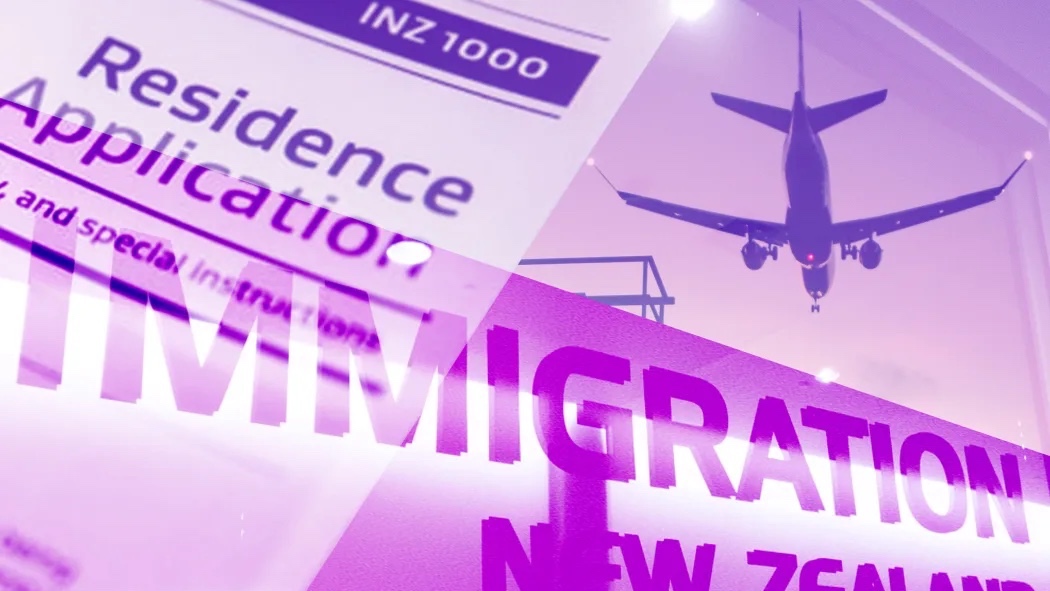
Analysis: From next week, people applying for New Zealand's main work visa in the mid-skill category will have to prove they are proficient in basic English, the government announced on Monday.
Those wanting to come to New Zealand on an Accredited Employer Work Visa (AEWV) in skill level 3 roles will need to score at least IELTS 4.0 band, or equivalent in other approved tests.
The policy itself makes sense. The timing does not.
The government announced this change on May 25, 2026, just six days before it goes live. For workers who still need to prepare, book a test, sit it and wait for results, six days is nowhere near enough time.
Some people will rush to lodge applications before the deadline. Others may miss the opportunity (particularly if their employer’s Job Check approval is about to expire).
Election 2026: Will Kiwi-Indian voters decide the battle for Takanini? A South Auckland seat with one of New Zealand’s biggest Indian populations is shaping up as a test for ethnic identity and the ballot box.
India is coming to Auckland: Full schedule revealed for cricket, football, hockey, Diwali From the Black Caps and All Whites taking on India to Diwali, hockey, bowls and city-wide light displays, Auckland has revealed its sporting centenary programme.
What does an Indian-origin MP owe Kiwi Indians? Priyanca Radhakrishnan on identity, belonging The three-term Labour MP says you can be Indian and Kiwi. Why should belonging require you to choose sides?
For a change affecting such a large part of the AEWV system, six days feels more like an emergency notice than a planned policy rollout.
Why does skill level 3 matter so much?
Skill level 3 covers a wide range of “hands-on” occupations across many industries that New Zealanders depends on every day. This includes cooks, carpenters, tilers, plumbers, electricians, motor mechanics.
Around half of all AEWV applications are for skill level 3 roles. That compares with just 16 per cent for skill levels 4 and 5 combined. So, about two-thirds of AEWV applications may now fall within roles where English requirements apply.
Until now, English requirements only applied to skill levels 4 and 5.
What standard is required?
The standard is not high. You need basic, everyday English. Think of the language you need to get through a normal workday and understand your rights as an employee.
It is neither academic English nor advanced. Immigration minister Erica Stanford described it as the level needed for common, everyday situations.
How can you meet the requirement?
There are two main ways to meet the requirement.
Some applicants will meet it through citizenship, work, study, or qualifications in specified English-speaking countries. Others will need to take an approved English test.
The test must be taken in person and the result must be no more than two years old.
Who does not need to meet the new requirement?
If your current AEWV expires on or before December 1, 2026, and you apply for another skill level 3 AEWV before it expires, you may not need to meet the new English requirement.
If Immigration New Zealand (INZ) has already assessed you as meeting the English requirement in a previous AEWV application, you may also be exempt.
One important detail. Even if your employer received a Job Check approval before June 1, 2026, you still need to meet the English requirement if you apply on or after that date.
What about cooks?
Cooks are skill level 3, so they were not screened for English proficiency under AEWV. Not any more.
Employers at ethnic cuisine restaurants and similar businesses have flagged this as a real concern. Finding cooks in some cuisine types who meet the English standard will not be easy.
The change could make it harder for businesses to recruit experienced and specialist hospitality workers at a time when labour shortages remain, says Nicola Waldren, general manager of Restaurant Association of New Zealand.
Specialty cuisine restaurants are particularly affected, she says, as experienced international cooks bring highly specialised skills that are difficult to source locally.
Waldren also raises a broader question.
She feels many migrant workers are already demonstrating practical English skills every day through customer service, teamwork and managing hospitality operations.
A formal test, she says, is not always the best way to assess that capability, especially for workers already successfully performing in these roles.
Thinking about residence?
This change connects to something bigger.
The government has announced two new skilled residence pathways from August 2026.
Minister Stanford noted that people coming to New Zealand in mid-skilled roles with plans for residence should arrive with at least basic English.
Once here, they will have up to five years to reach the higher English standard required for residence.
The message is clear. If residence is your goal, English should not be left until the last minute. AEWV English is set at a basic level, but residence requires a higher English standard of IELTS 6.5, or equivalent.
Is this good policy?
Basic English for workers coming to New Zealand is a reasonable expectation. IELTS 4.0 is not a high bar. It gives workers the ability to understand their rights, raise concerns with their employer and engage with their community.
The policy intent is sound. The rollout has not been. Changes of this scale deserved more than six days’ notice.
If you are in a skill level 3 role and this article has raised questions for you, get clarity before you apply.

A man with a mustache and beard is smiling and wearing a navy blue suit jacket over a white shirt.
(Ankur Sabharwal is a Licensed Immigration Adviser and founder of Visa Matters, an Auckland-based immigration advisory firm. He provides immigration commentary on TVNZ Breakfast and has been published by Stuff and The Post. This article is general information only and does not constitute immigration advice.)