
New Zealand giving Indian students little chance to fix visa applications, finds new report

India is one of New Zealand's biggest markets for international students.
Indian students whose visas were rejected were far less likely than Chinese applicants to be asked for more information, according to the report.
Only about one in eight Indian students whose offshore visa applications were rejected in the year to July 2026 were given an opportunity to address concerns or provide further information before Immigration New Zealand (INZ) made its decision.
Only 13 per cent of Indians who applied from offshore received that opportunity, compared with 50 per cent for China, immigration data shows.
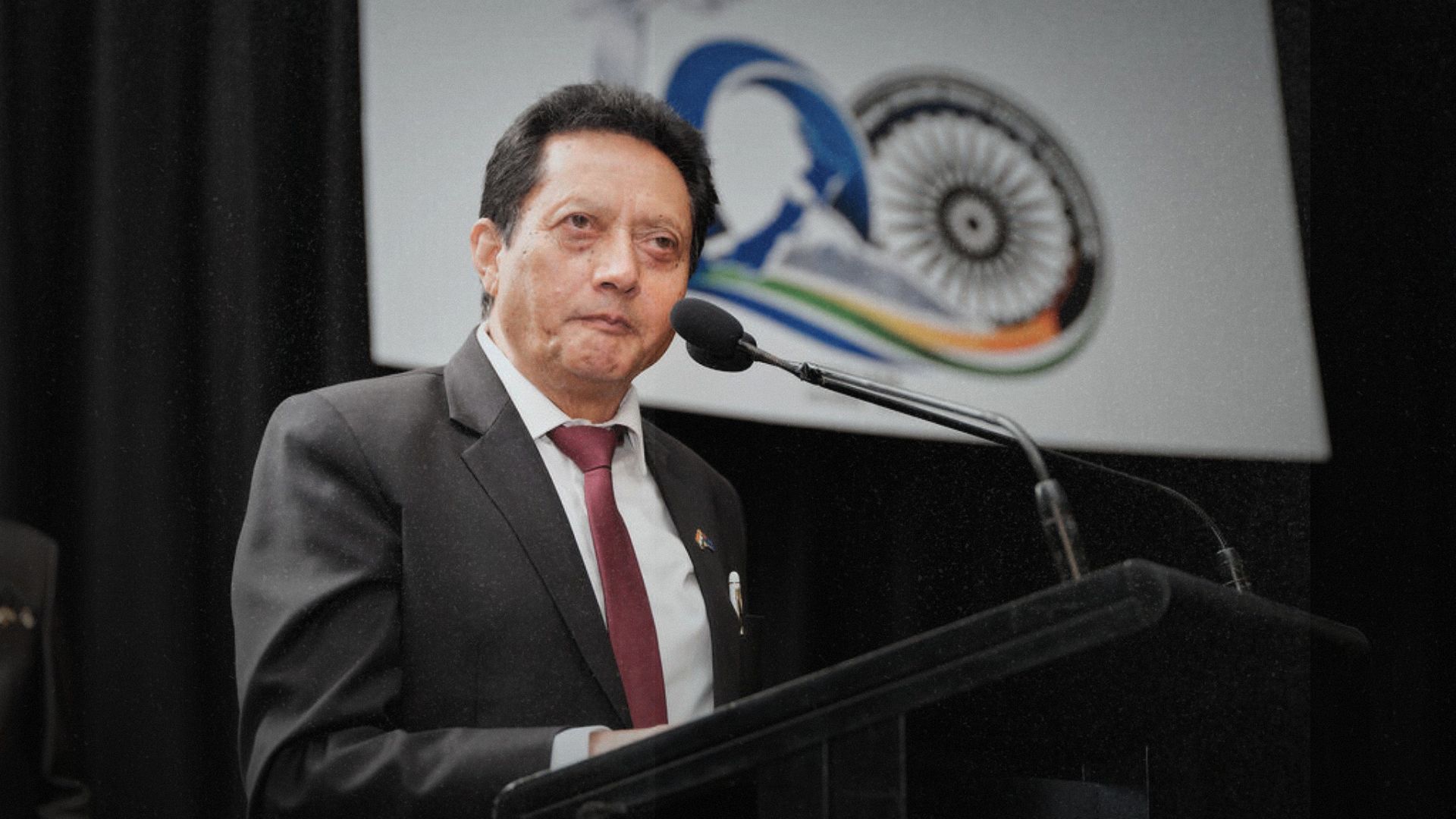
The disparity is highlighted in a September analysis by Auckland-based licensed immigration adviser Steve Norrie, director of the New Zealand Association for Migration and Investment (NZAMI).
Norrie began examining student visa outcomes after examining INZ data on offshore applications declined in 2025. NZAMI’s Policy and Advocacy Committee then sought more detailed figures from INZ.
The resulting data covered 100,382 student visa applications processed through ADEPT – INZ's new online visa processing system – between August 18, 2025 and July 29, 2026.
Selfie: ‘Daddy, please don’t take me to an India-NZ cricket match’. A migrant's dilemma Can a migrant embrace a new home without abandoning old loyalties? Sports often offers a reckoning for migrants.
Migrant prison guards in Auckland accused of drug smuggling can't work, can't go home Two fathers facing serious corruption charges have been unable to work elsewhere because of their visas and awaiting criminal trials in 2028.
Can you be Indian and Kiwi? National's Mahesh Muralidhar on patriotism, racism and belonging National's big ticket Indian-origin candidate on what ethnic representation really achieves and why New Zealanders still struggle to get along.
The dataset allows comparisons across countries, course types and how often declined applicants were first asked for more information or invited to respond to concerns.
Across all declined offshore applications in the dataset, just 16.9 per cent had received either a request for further information, known as an RFI, or a potentially prejudicial information letter, known as a PPI.
Those letters can give applicants an opportunity to respond before a final decision is made. But the country-by-country differences were much wider.
About half of declined Chinese applications had received one of those letters. For India, it was 13 per cent. For Brazil, it was six per cent.
Norrie puts the contrast bluntly. “Why can immigration officers PPI or RFI 1 in 2 of every declined application for China, but only 1 in 8 for India and 1 in 17 for Brazil?”

Auckland-based immigration adviser Steve Norrie. (Supplied photo)
He then raises a wider concern. “Is Immigration New Zealand’s drive for productivity putting New Zealand’s reputation as an international education destination at risk? What should the trade-off be between productivity and good practice?”
The report includes responses from immigration officials on the specific findings. Norrie says INZ said they must also consider whether asking for further information is likely to make any difference.
“If applications are poorly constructed and there are a number of pieces of information missing, then we do not expect staff to RFI,” INZ said in its response included in the paper.
Where an application has merit and is missing a piece of information that could tip it towards approval, staff are advised to seek that information, INZ said.
That explanation prompted another set of questions from Norrie.
“What criteria are used to determine whether there is ‘value’ identified in the application? Is ‘value’ defined for immigration officers or is it up to their subjective judgement? Are certain markets like China perceived to be of higher value than say Brazil or India?”
India and China together accounted for 45.2 per cent of offshore applications in the dataset. “So why is India so disadvantaged vis-à-vis China?” Norrie asks.
He notes immigration managers had previously raised concerns with him about fraudulent documentation from the Indian market, but questioned whether that remained the explanation.
“Is this still the case, or is it a prejudice based on dated market intelligence? Is there relatively no fraud in China?”
INZ says financial evidence is one of the main reasons for the difference. It said large portions of the Indian caseload were declined because applicants could not meet financial requirements.
The agency said false, misleading or fraudulent financial information was detected in some cases, while in others families simply did not have enough money to support international study.
China, INZ said, had not traditionally presented the same level of financial issues. Norrie also examined whether the newer ADEPT processing system itself could be contributing to worsening outcomes.
He found offshore decline rates in the ADEPT-only data were 16.9 per cent, 2.4 percentage points higher than in the 2025 calendar-year data, which included applications processed through both the old and new systems.
INZ rejected the suggestion that ADEPT itself was the cause, saying the caseload had changed, with more applications coming from markets with lower approval rates.
That led Norrie back to what is perhaps the central question raised by the paper.
“Are higher decline rates for markets such as Bangladesh and India symptomatic of poorer quality applications from these markets or an unwillingness of immigration officers to investigate applications from these markets further with RFI or PPI letters?”
Norrie’s wider concern is that persistently high rejection rates, combined with relatively few opportunities to answer concerns, could undermine New Zealand’s efforts to attract international students.
The government wants the international education sector’s economic contribution to reach $7.2 billion by 2034.
NZAMI plans to keep seeking student visa data on a quarterly basis and says future requests will also cover South Asian markets missing from the present detailed dataset, including Bangladesh, Nepal and Sri Lanka.