
0 out of 40: New Zealand is taking a hard line on Khalistan asylum appeals
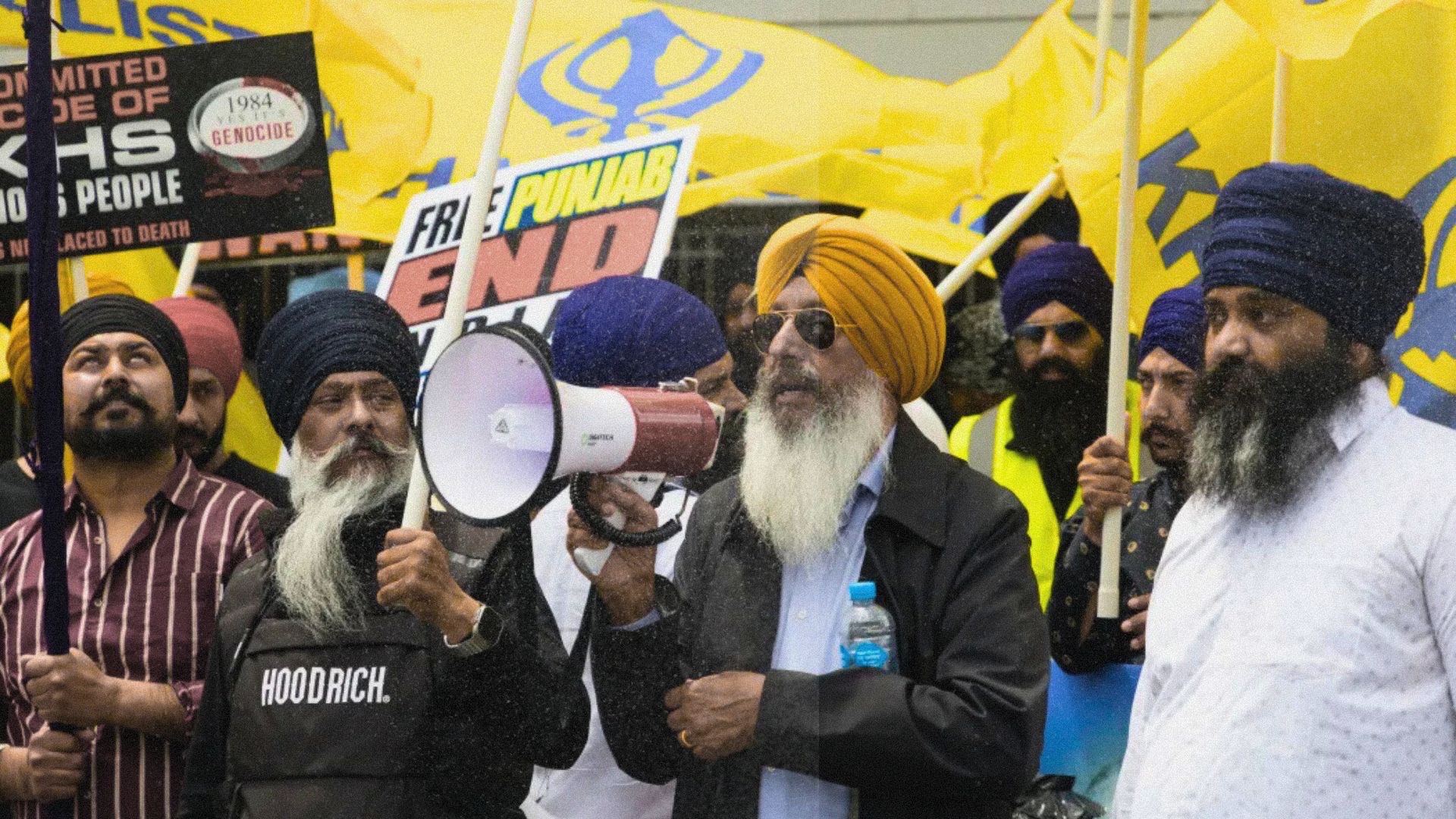
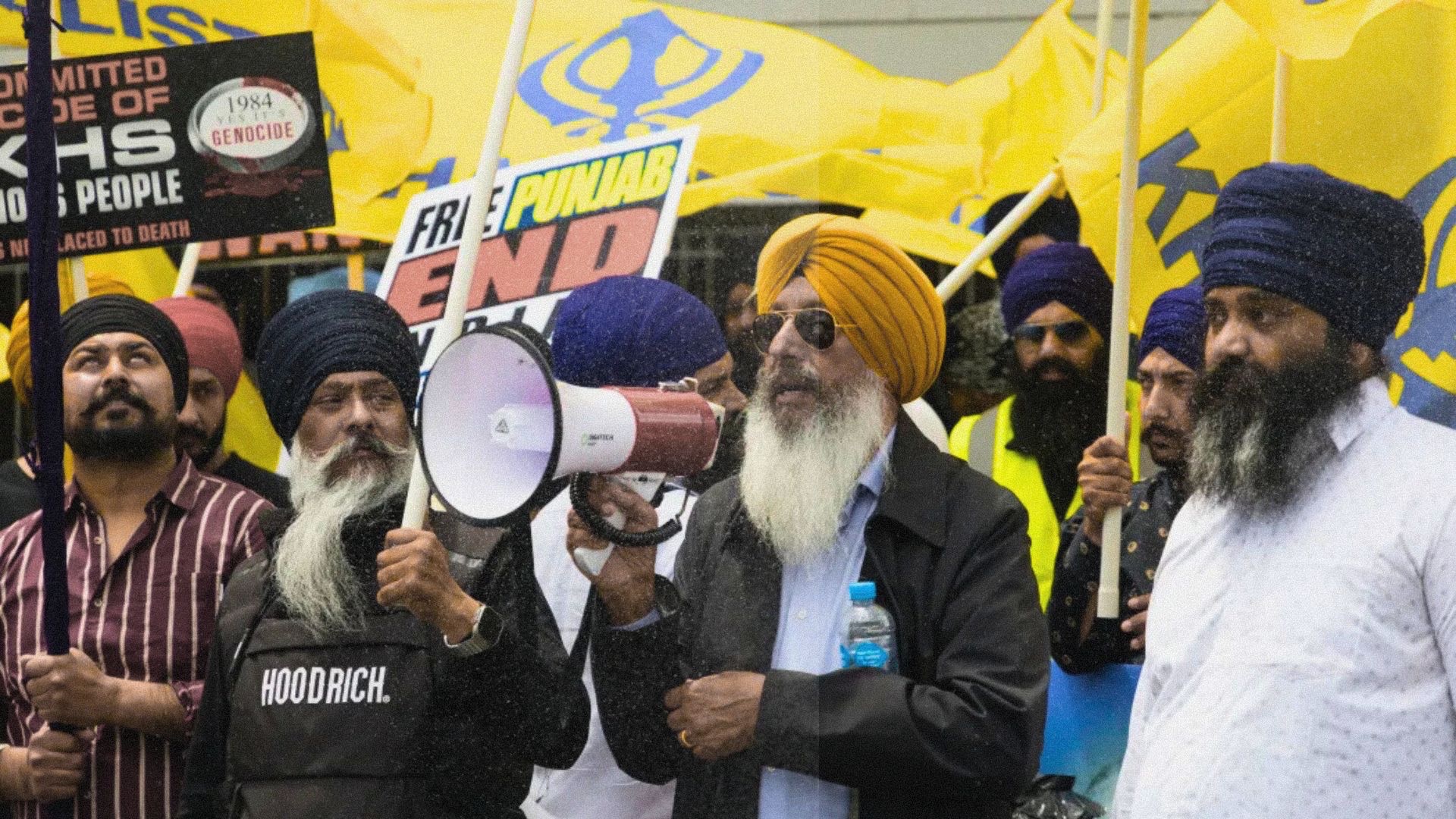
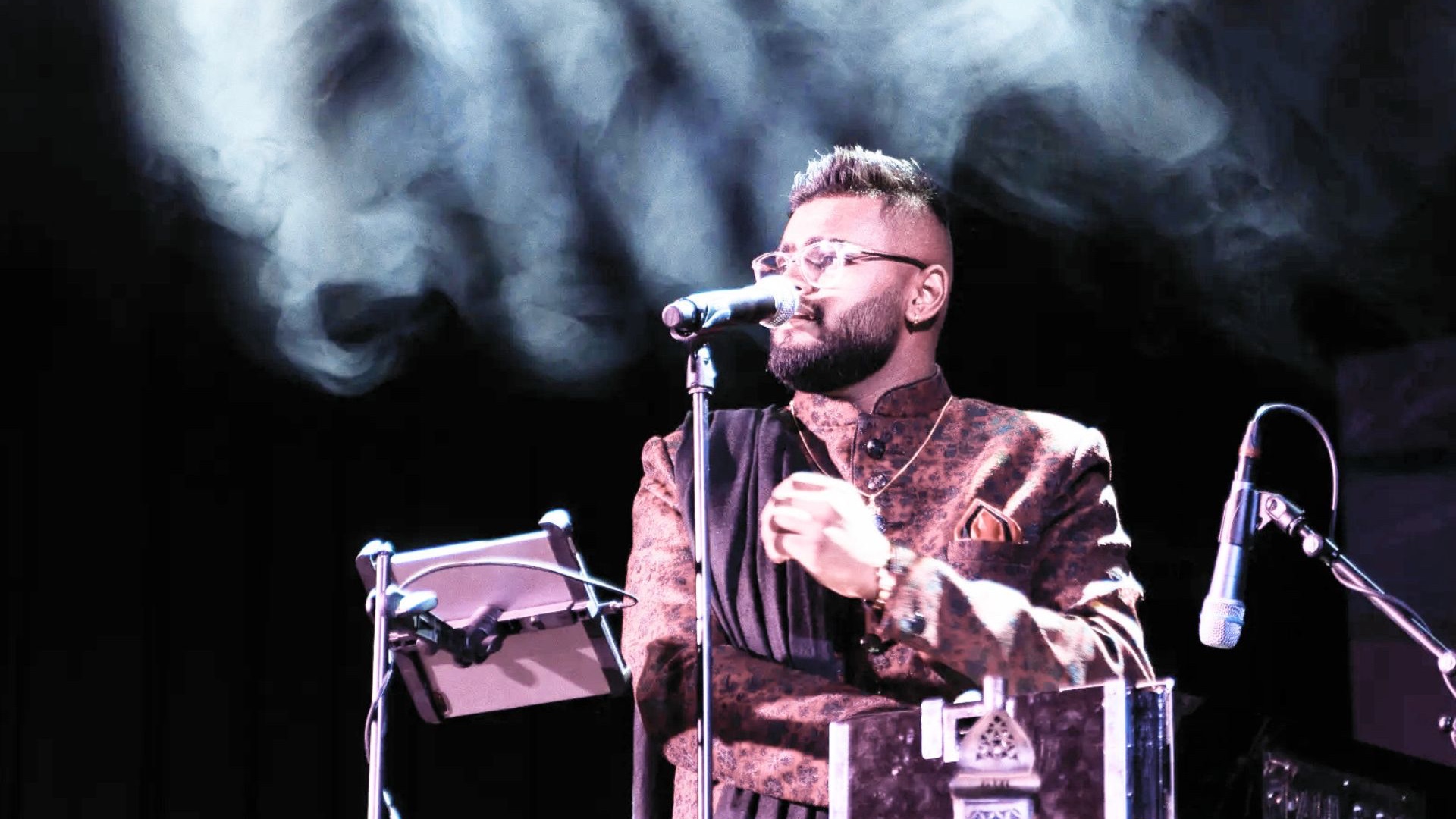
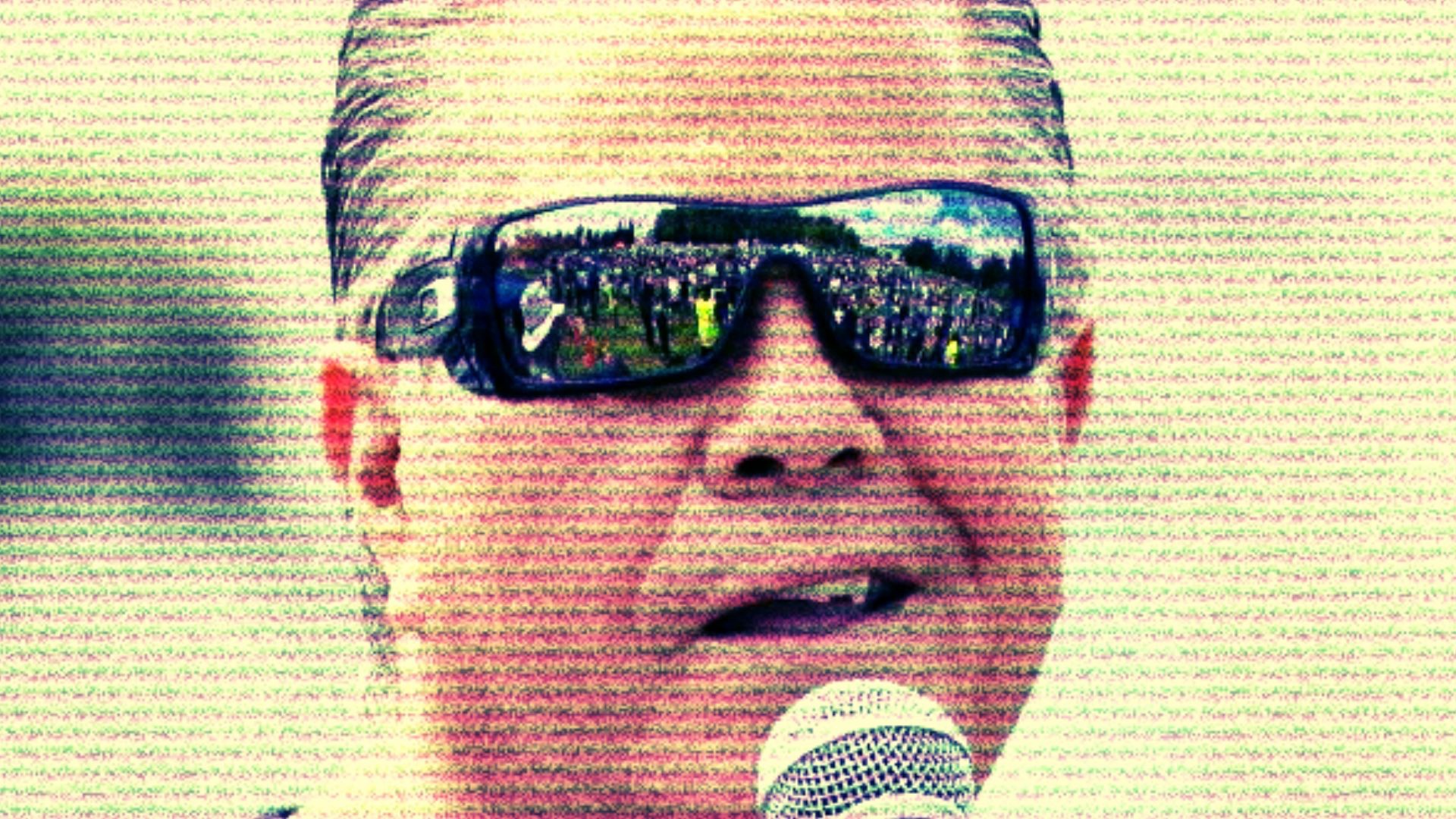
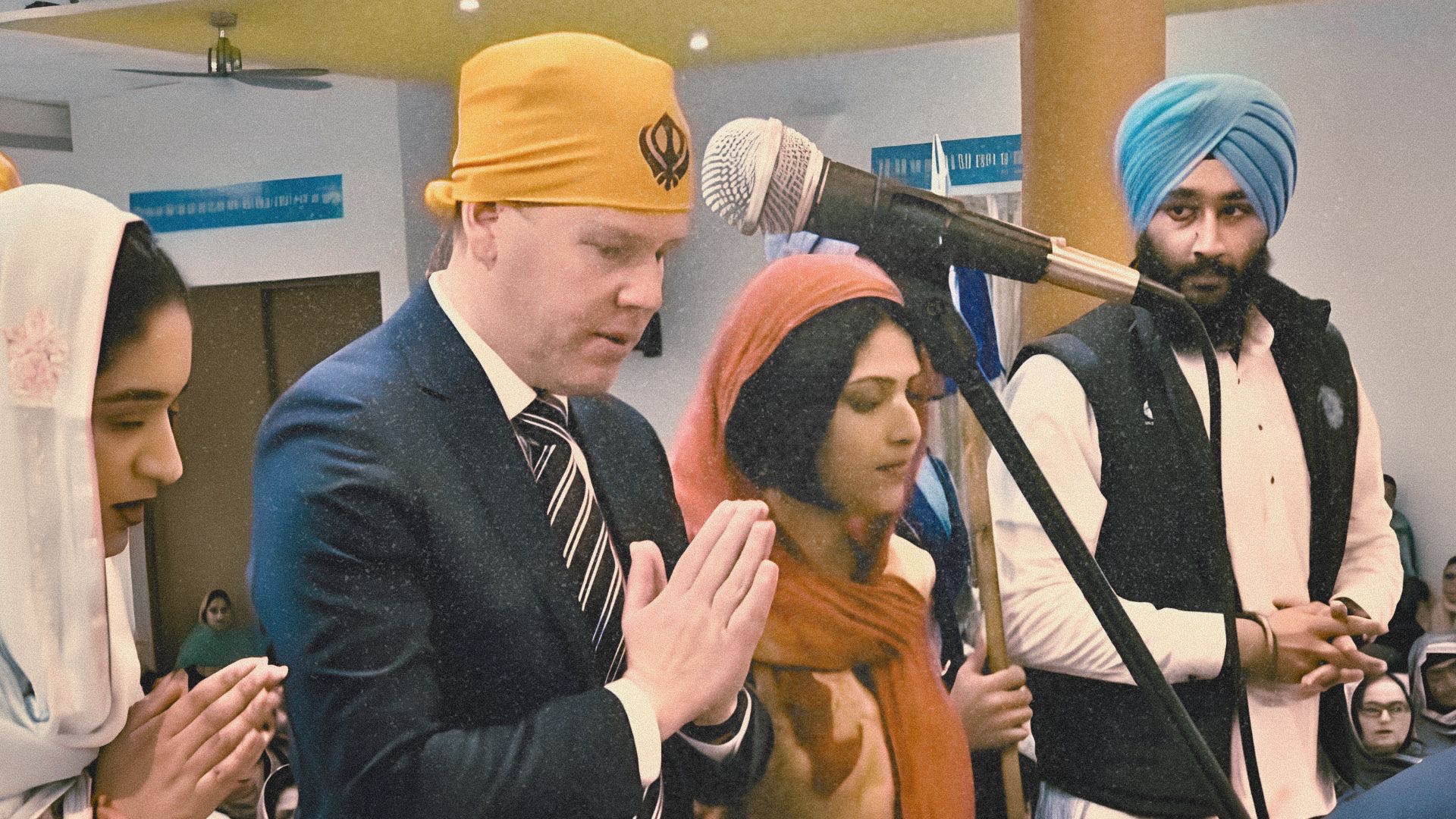
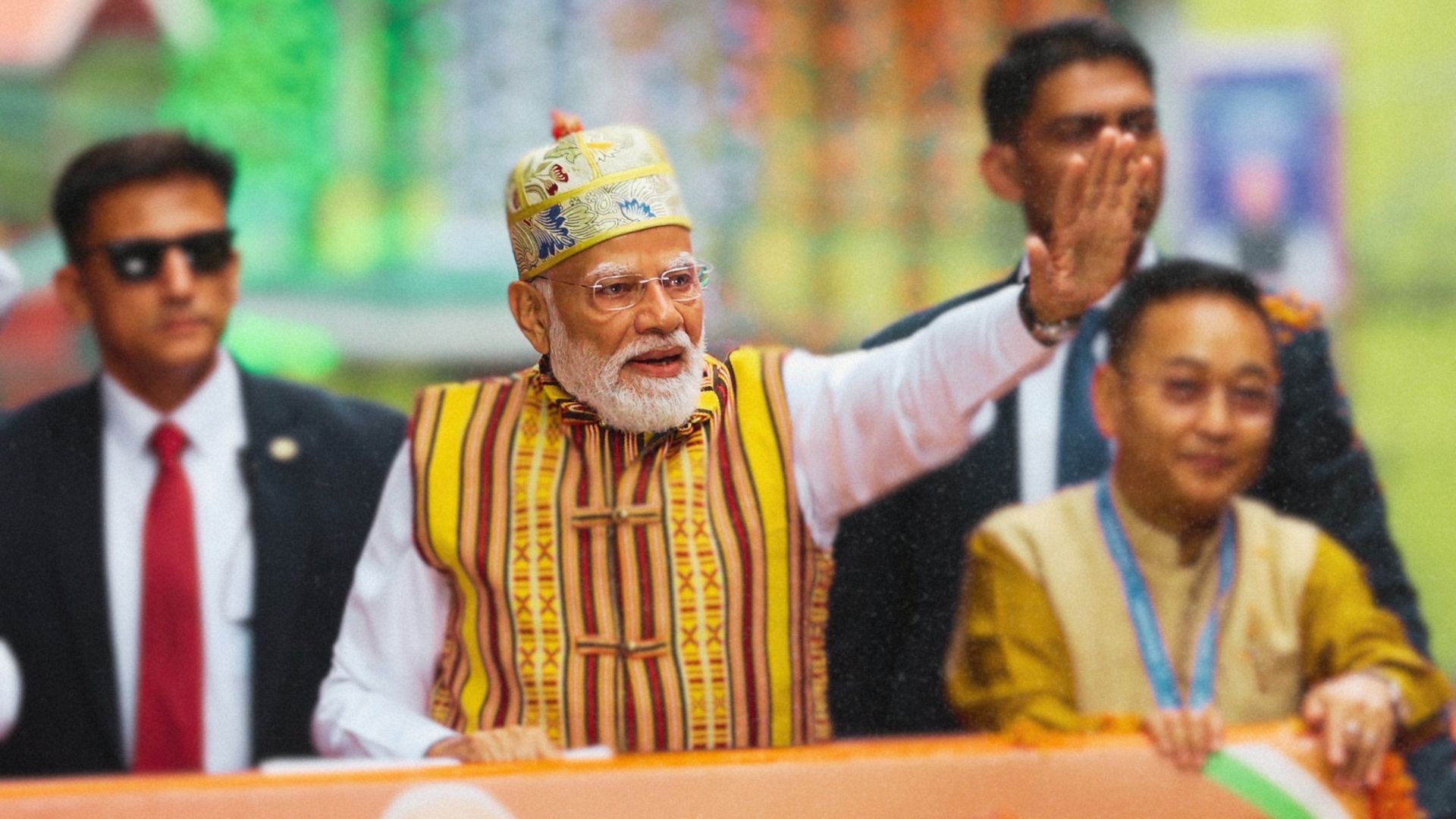
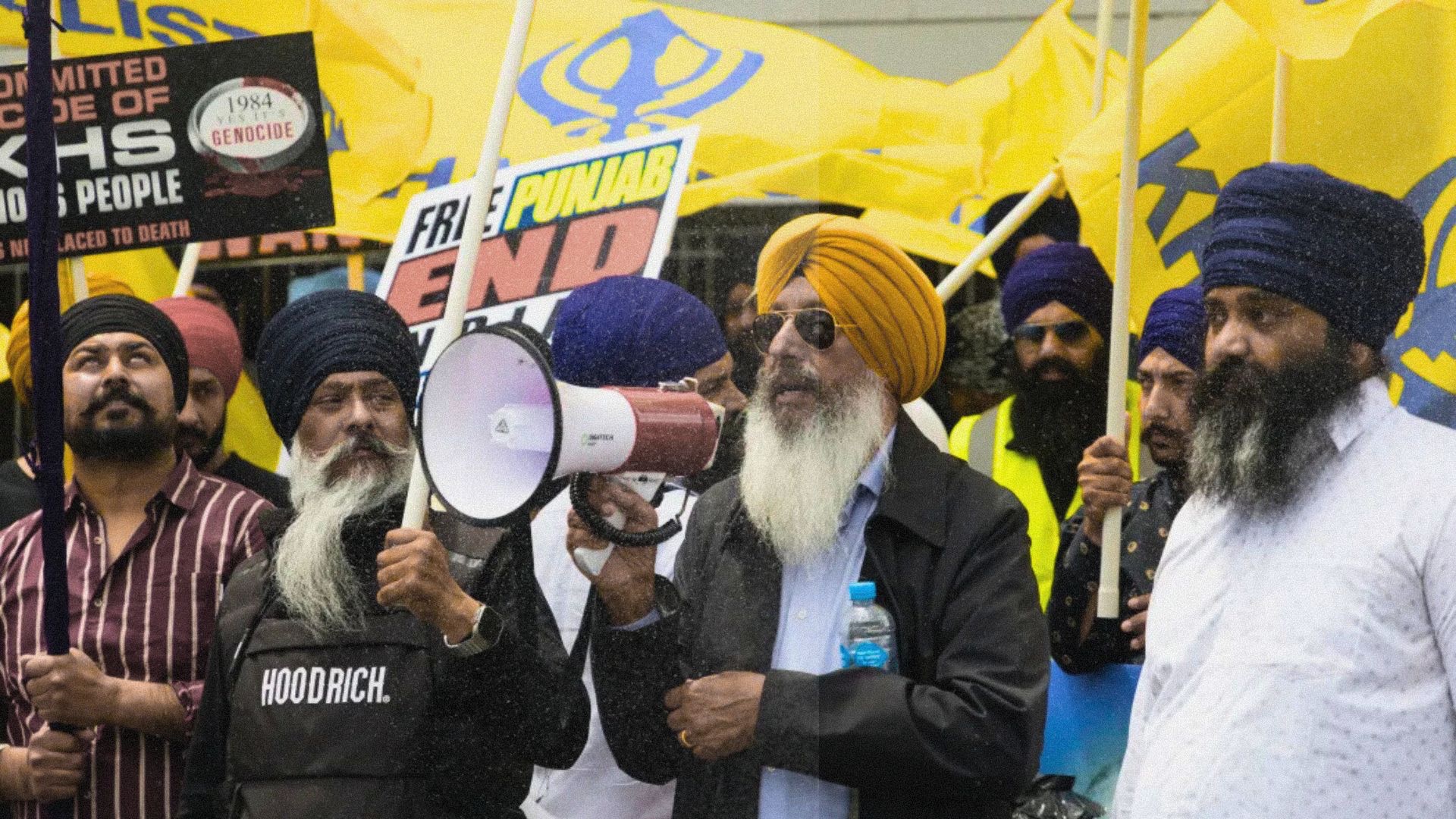
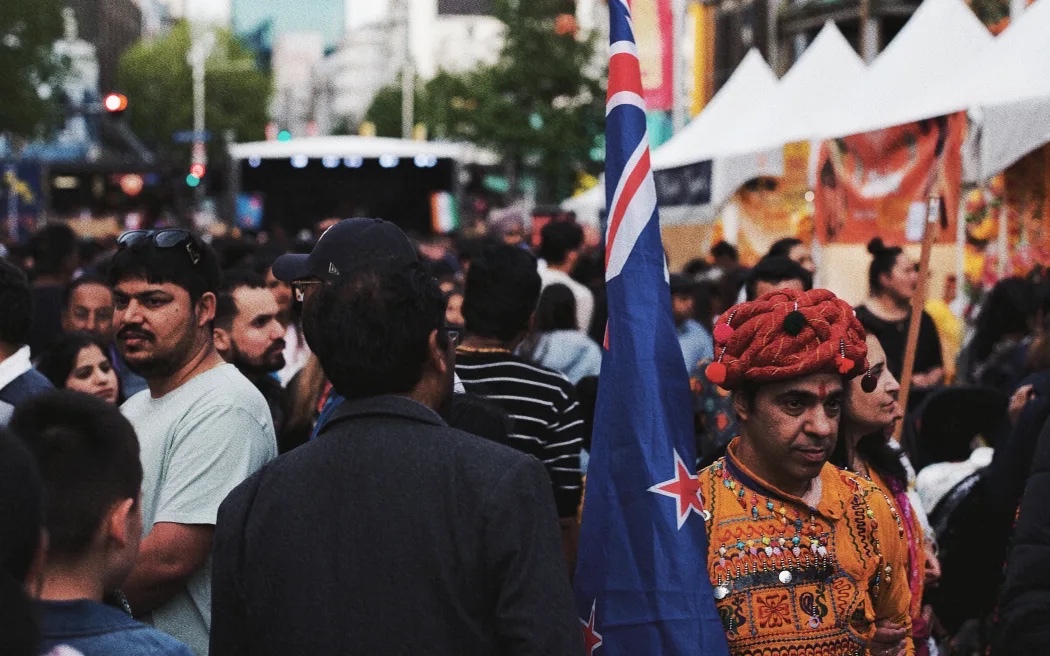
Avtar Singh Pannun, president of Sikhs for Justice, addressing a Khalistan rally outside the Mahatma Gandhi Centre in Auckland on November 2, 2024.
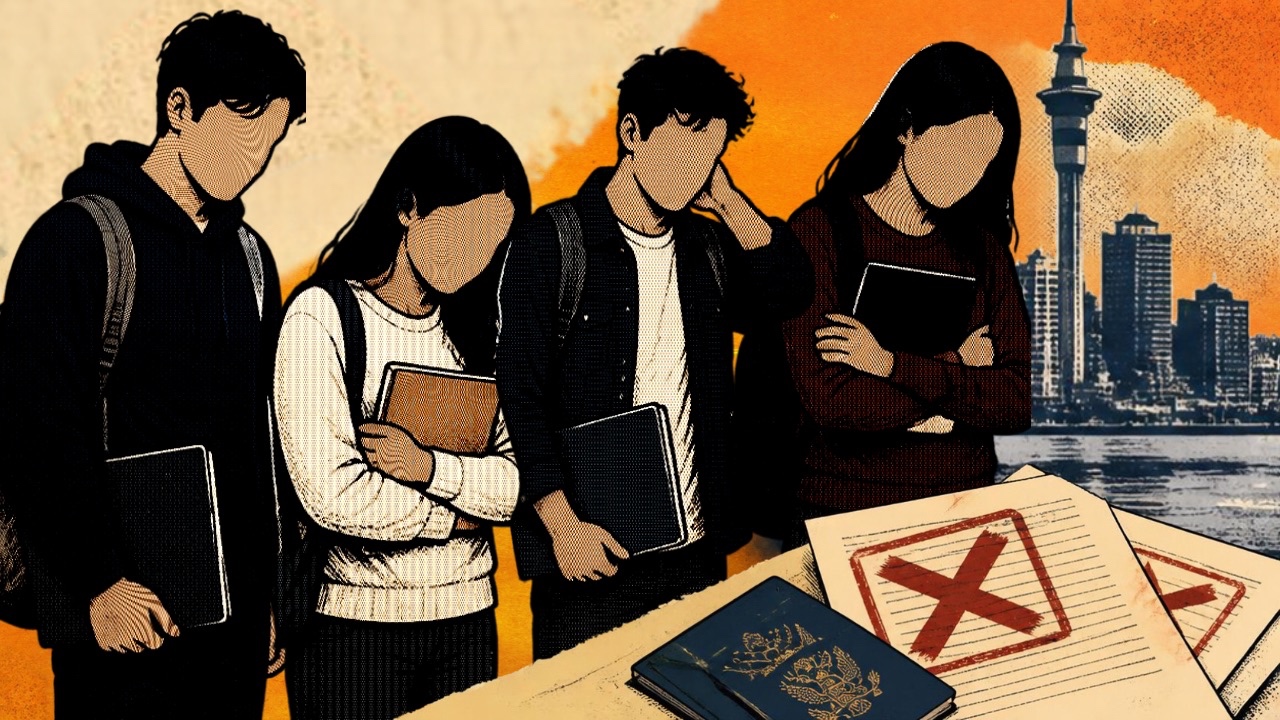
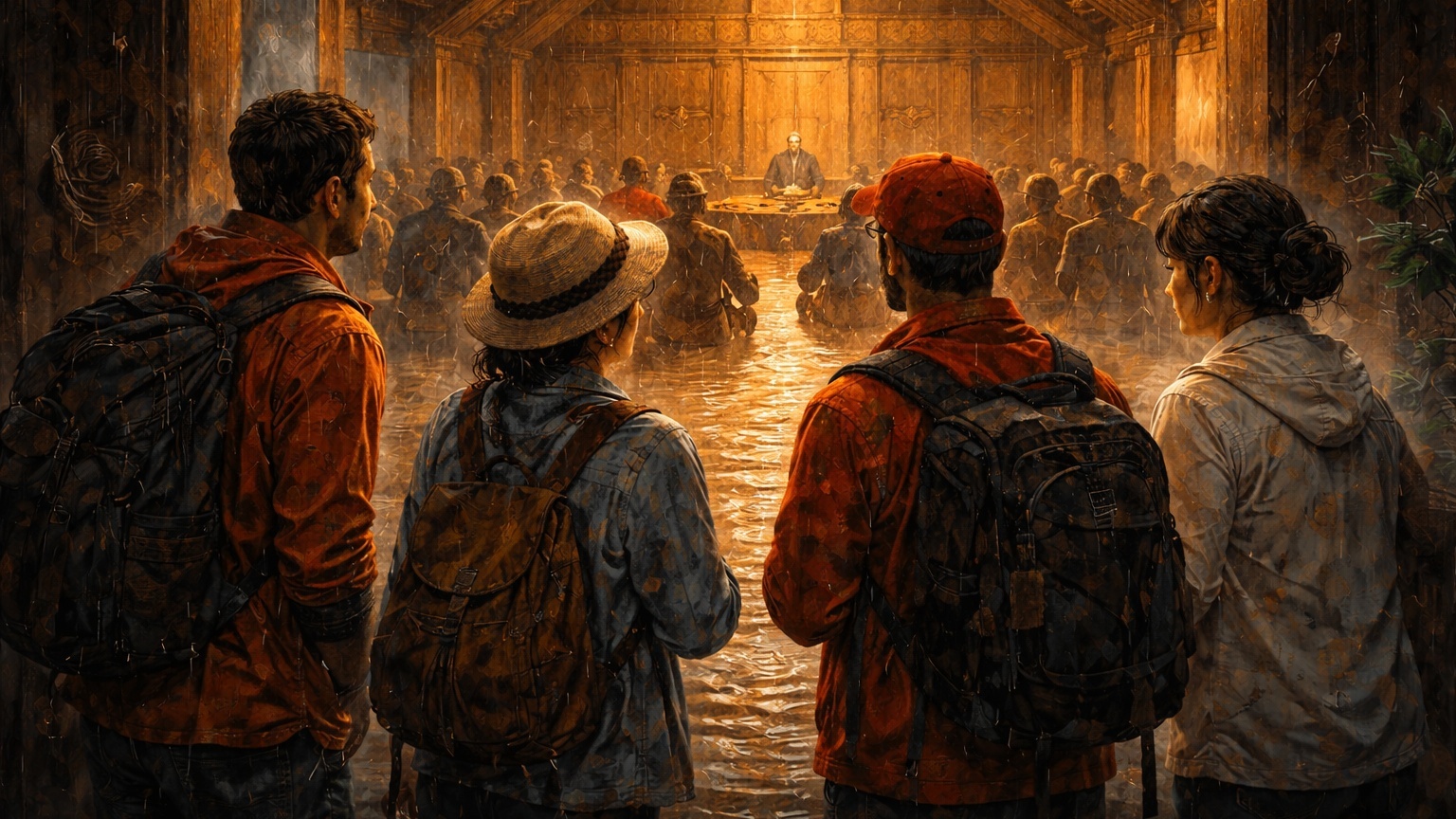
Since 2025, New Zealand’s apex immigration tribunal has decided on 40 Khalistan-linked asylum cases. Not one has succeeded.
For a brief period in 2024, New Zealand’s refugee system appeared to offer a possible route to protection for Indians who could show that their support for Khalistan put them at genuine risk of persecution.
Two men succeeded before the country's appellate immigration tribunal that year. The Immigration and Protection Tribunal accepted both as credible supporters of the movement for an independent Sikh state, and was convinced their profiles could expose them to serious harm if returned to India.
What happened afterwards looks very different. A review of published Immigration and Protection Tribunal decisions shows 15 Khalistan-linked cases in 2025 and another 25 so far in 2026. All 40 have failed.
The cases include people who actively supported Khalistan, people accused or perceived to support it, those who said authorities would regard them as separatists, and claimants whose Khalistan connection formed only one part of a broader fear of harm.
Before a case reaches the appellate tribunal, it is considered by Immigration New Zealand (INZ). Officials say INZ does not currently produce or report data on asylum claims according to the specific grounds on which they are made.
Election 2026: Will Kiwi-Indian voters decide the battle for Takanini? A South Auckland seat with one of New Zealand’s biggest Indian populations is shaping up as a test for ethnic identity and the ballot box.
India is coming to Auckland: Full schedule revealed for cricket, football, hockey, Diwali From the Black Caps and All Whites taking on India to Diwali, hockey, bowls and city-wide light displays, Auckland has revealed its sporting centenary programme.
What does an Indian-origin MP owe Kiwi Indians? Priyanca Radhakrishnan on identity, belonging The three-term Labour MP says you can be Indian and Kiwi. Why should belonging require you to choose sides?
“While some information may exist within case records, it would require extensive manual review and is not held in a readily retrievable format for reporting purposes,” a spokesperson told Awaaz.
That means there is no official dataset showing how many asylum claims have invoked Khalistan as a ground, or what proportion succeeded at INZ's Refugee Status Unit before ever reaching the tribunal.
The figures in this analysis, therefore, relate only to published tribunal decisions identified through a review of judgments. But within that publicly available body of decisions, the pattern is striking.

People gather at Auckland's Aotea Square on November 18, 2024, to vote in a non-binding "referendum" on Khalistan.
The two cases that succeeded
The first successful 2024 case involved a Sikh who had developed a substantial public pro-Khalistan presence while living in New Zealand.
The tribunal heard the man had joined pro-Khalistan Facebook groups from around 2017, regularly shared material on Facebook and Instagram and followed prominent separatist figures.
His accounts were public. At the time of the hearing, his Facebook account had 459 friends or followers and his Instagram account had 434. He said he had received threatening calls from India and that his Instagram account had previously been blocked.
The tribunal ultimately found that he had a well-founded fear of persecution because of his political opinion and recognised him as a refugee.
Several months later came a second successful case. That appellant had spent years engaging with pro-Khalistan material online and had a prominent pro-Khalistan tattoo.
The tribunal accepted his evidence as credible and found that the combination of his beliefs, advocacy, online activity and a tattoo meant there was a real chance he would come to the attention of Indian authorities. He too was recognised as a refugee.
Those two decisions have since become important reference points in Khalistan asylum litigation.
Lawyers started citing them
Of the 40 Khalistan-linked cases identified in 2025 and 2026, lawyers or representatives relied on one or both successful 2024 decisions in at least nine cases.
In one case, the counsel expressly argued that the facts were analogous to both successful appeals. But the tribunal disagreed.
It said the two earlier appellants had an “elevated profile” compared with the man before it. One had engaged in daily public pro-Khalistan posting and had attracted government monitoring, while the other had extensive online engagement, a tattoo and membership of pro-Khalistan groups.
In a separate case, an appellant had voted in a non-binding "referendum" in Auckland in 2024 on the creation of an independent homeland for Sikhs within India. He had also attended a protest outside the Indian high commission in Wellington.
Again, the tribunal described his activities as “low level”. There was no evidence Indian authorities knew about them, it ruled, and his social-media footprint was comparatively small.
In another case, the tribunal made an observation that captures what appears to have been happening across the caseload.
“It is frequently the case that counsel cite to the Tribunal the decisions in SK … and RE…” But, it added, the circumstances of those successful appellants were “materially different”.
That distinction now runs through decision after decision.
Supporting Khalistan is not enough
The tribunal’s recent judgments show that support for Khalistan, by itself, is nowhere near enough to establish a refugee claim.
Voting in a referendum is not enough. Attending a protest is not necessarily enough. Following pro-Khalistan accounts online is not enough. Even having experienced previous police questioning or being suspected of separatist sympathies does not automatically establish the legally required “real chance” of future persecution.
The tribunal repeatedly looks for something more individualised. A credible and sufficiently prominent political profile, evidence that authorities know or are likely to know about it, and a realistic prospect that this would result in serious harm.
That is precisely what separated the successful 2024 cases from many of those that followed.
In one case, the tribunal accepted that the appellant had some history of Khalistan support but described it as low level and said any police interest was by then remote.
Counsel’s attempt to compare him with the successful 2024 appellants failed because he did not share their elevated profiles.
In another case, the appellant’s New Zealand activity included participating in a referendum rally, voting in the referendum and protesting outside the Indian high commission.
The tribunal nevertheless found no evidence those activities had generated interest from Indian authorities.
In another case, counsel relied on one of the successful 2024 decisions on behalf of a man who had previously been detained and questioned about Khalistan. The tribunal found those encounters occasional and insufficient to demonstrate that he had the sort of political profile that would expose him to persecution.
The numbers changed sharply after 2024
The year-by-year pattern is stark:
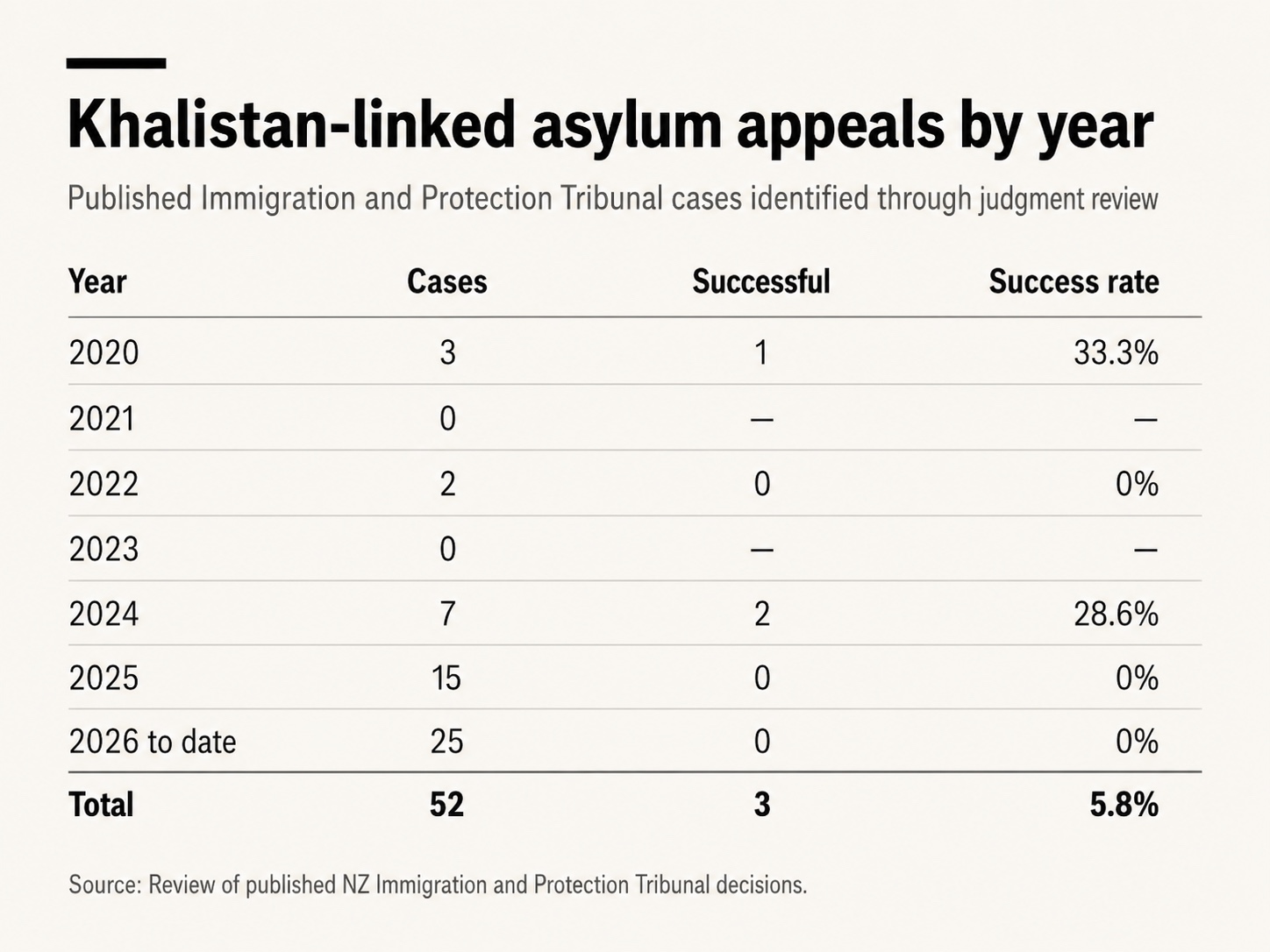
The single successful asylum case in 2020 is also revealing. That appellant was found to be genuinely and “fervently” supportive of Khalistan. He had more than 3,000 Facebook friends, pro-Khalistan TikTok videos attracting thousands of views and prominent tattoos connected to the cause.
That means all three successful cases identified since 2020 share something important. They involved claimants with unusually visible, credible and sustained pro-Khalistan profiles.
The later unsuccessful cases repeatedly fall short of that threshold. Some contain serious credibility problems. In others, the tribunal accepted the claimant genuinely held pro-Khalistan views but concluded their activity is too limited.
In still others, the claimant may have been labelled a Khalistani or questioned by police but couldn't establish that it translated into a real risk of serious future harm.